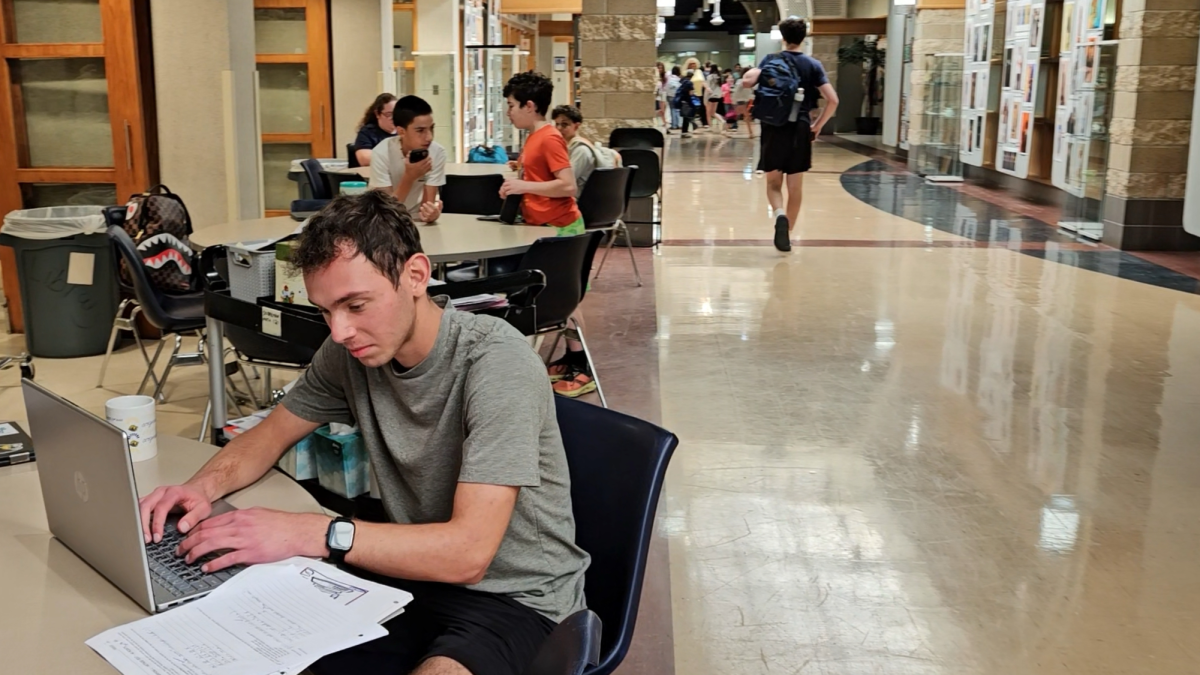

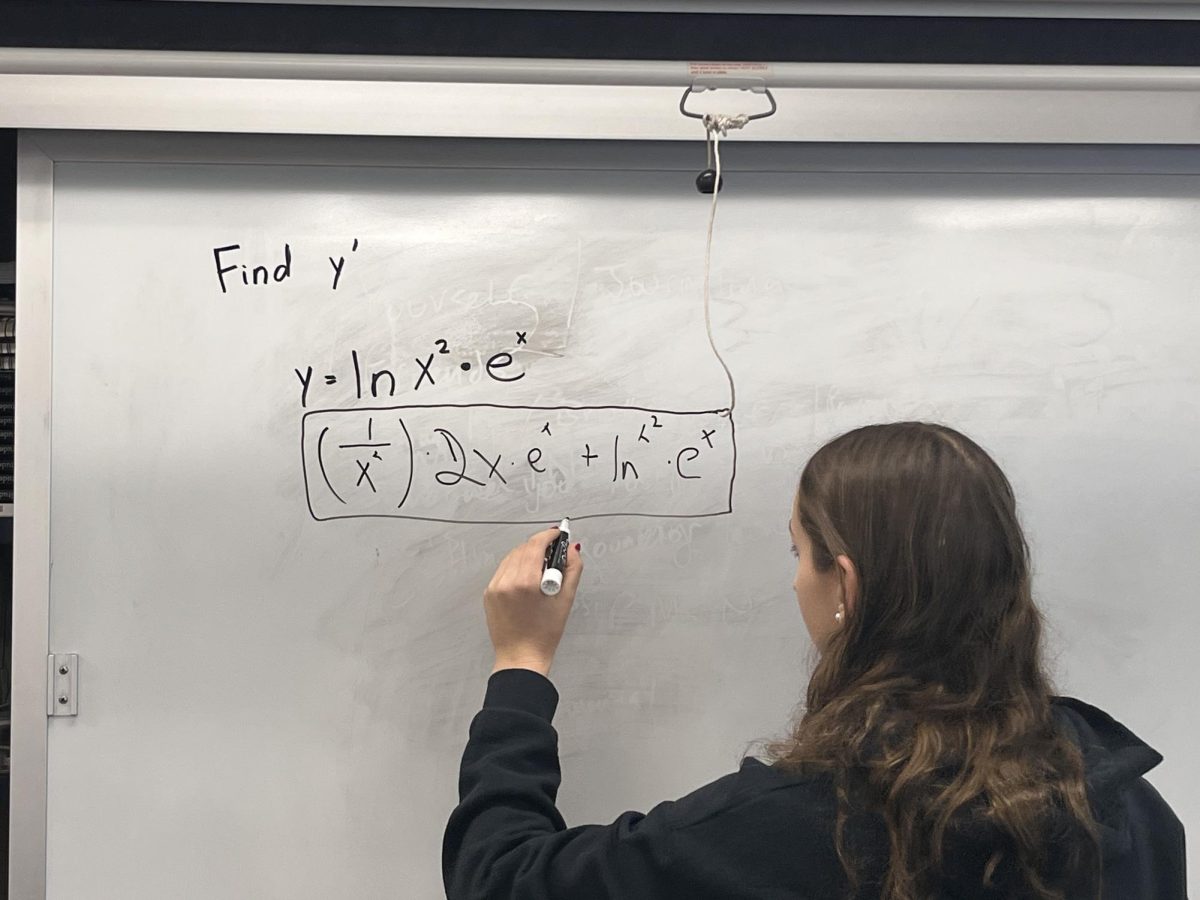
Freshman Jack Spiegel was walking down a CESJDS hallway when the announcement he had been waiting for sounded over the intercom. It’s time for his math placement exam. His heart raced as he slowly walked towards the classroom. Jack Spiegel sat down, awaiting the exam that will decide his future. Quickly, Jack began, going through the rigorous material that made up the final exam. After around an hour, it was over. After days of waiting, he got the call. He’s in.
Jack is now one of six students taking math class two years ahead of their grade level.
To get into this advanced math level, students have to either prove that they know all of the material without taking previous math classes or have taken a high school-level math class in middle school. The latter is the more prevalent option and means that by the time students are in high school, they are multiple grades ahead of the rest of the students.
“I think math is one of those subjects that some people really have a passion for, and they might choose to do some independent study. Khan Academy, for instance, and various YouTube tutorials have given people the ability to study more math independently,” Tori Ball, Dean of Experiential and Leadership Learning and Chair of the Math Department, said.
All but two of the six students took high school math classes in middle school. These classes were available to them because of factors including their Measures of Academic Progress test scores and teacher recommendations.
Sophomore Ezra Libbin is now learning calculus, which is a 12th-grade class. Advanced math classes were available to him because of teacher recommendations starting in elementary school. Libbin and other advanced students were pulled out of the regular math classes to study math at a quicker pace than their classmates. This allowed him to be ahead of his classmates from a young age and be placed in high school math in middle school.
“This experience has been positive, because I was very bored inside my other math class before I moved up a grade where I knew everything, and in this class I can actually learn new stuff,” Libbin said.
While parents help decide if their child will go into advanced math, it is up to the student to make the decision on their own. When asked by math teacher Karen Pang if Jack wanted to move up because of his high test scores and how quickly he finished his tests at the beginning of the school year, mother Rachael Spiegel had no problem with it.
“She wanted to see how we felt, and we told her we supported it, but ultimately, it was Jack’s decision, because he’s the one who knows the material,” Rachael said. “He’s the one who would be taking on additional work, skipping a whole year of math.”
While moving up grade levels can be a good way to appropriately challenge students’ learning, there are some challenges of running classes for these younger advanced students due to JDS seniors only being at the school for a semester.
The two senior math classes that are available are Honors Multivariable Calculus and Honors Statistics. If a student is one year ahead, they can take one of those classes in 11th grade and another in 12th. The way they do this is by making a one-semester class a full-year class by adding more material. However, this option is not available to students two years advanced because by the time they reach 12th grade, they will have run out of material to learn. Instead, they can take an online math course that is not run by the school.
“It’s awesome when people are accelerated, but we are limited by the number of classes we can offer with seniors only here for a semester,” said Ball.
You only need three and a half math credits to graduate high school, and if they are ahead in math and have taken a high school math class in middle school, then they would already have enough credits by senior year and wouldn’t have to take an online math class. Students can take computer science or an extra science class instead.
While you don’t have to take math in senior year under these circumstances, most students who are this advanced in math love math and want to continue studying it. This is the case with Jack Speigel, who is excited to continue math at a high level.
“When his [Jack’s] math teacher spoke to me on the phone, she said, ‘I’d like Jack to take the final so we can see what he knows. But if he doesn’t move up, I don’t want to waste his time — it’s a two-hour math test.’ And I told her, ‘That’s not a waste of time for Jack. That’s a fun afternoon,” said Rachael Speigel.