
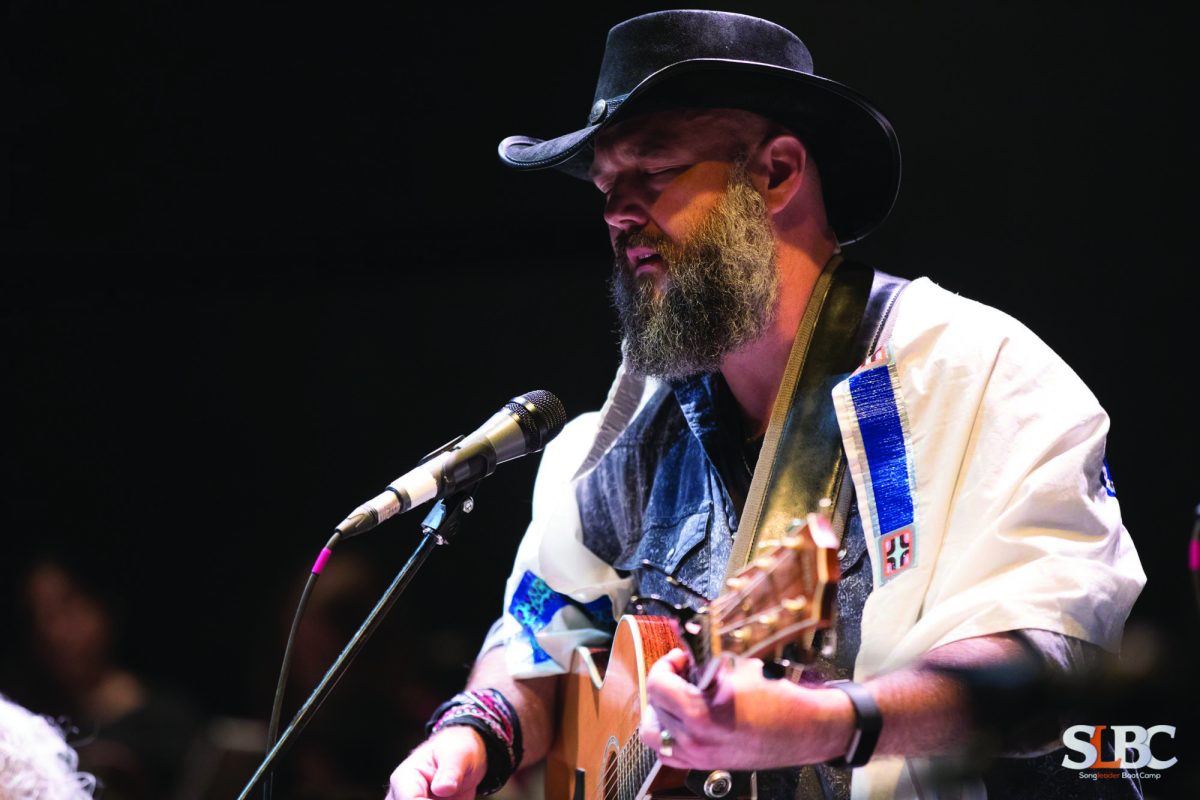
At first listen, Joe Buchanan’s music sounds like classic country artists, such as George Strait and Alan Jackson. However, when he begins singing Hebrew prayers, such as Mah Tovu and the Shema, it quickly becomes clear that Buchanan is unique. Clad in a cowboy hat and Star of David belt buckle, Buchanan masterfully blends traditional country and Americana with explicitly Jewish themes.
In addition to several singles, Buchanan’s discography includes three albums: “Unbroken,” “Back from Babylon” and “Heaven & Earth,” released last year. His most popular songs on Spotify include “My Beloved,” “Hear (Sh’ma)” and “Shalom Aleichem.”
Born in Texas and raised on country music, he began exploring Judaism after his wife of 13 years revealed she was Jewish during a visit to the U.S. Holocaust Memorial Museum. Moved by the experience, they began studying Judaism together with a rabbi, ultimately leading Buchanan to decide to convert.
“It changed my life when [the rabbi] said, ‘There is one God, and there’s nothing wrong with you.’” Buchanan said. “He said, ‘You’re great just like this, and you’re loved by your Creator just like this. You’re part of creation.’ He said, ‘You do good things just because it puts more good in the world. It’s not for some reward later on or some fear of punishment.’”
While he has always loved country music and began playing guitar at 13, he did not pursue music professionally, choosing a career in human resources instead. It was only after his conversion to Judaism that music took on a new purpose, leading him to leave his corporate job and become a professional country artist.
Buchanan said he tries to use his music to explore religious themes about God’s love and forgiveness, as well as the uniqueness of American Jewry. Out of all his music, one song that particularly stuck with me was “Texas” from his most recent album, “Heaven & Earth.” The song describes his deep connection to his home state, incorporating traditional country chords and instrumentation with guitar, piano and fiddle music.
The lyrics resonate with me and perfectly encapsulate his musical career and spiritual journey. Buchanan sings that he had been to Israel, but “Yeah now, Texas is like a holy land to me / It’s the place where the heavens feel close /…I’ll be glad I lived in Texas where I first found the reason to pray.”
Buchanan also addresses contemporary issues. His most recent album includes “You Ain’t Got the Stones,” which mocks online antisemitic trolls for their “constant lies.” However, Buchanan is also trying to disprove stereotypes about country music and people who say his music does not sound Jewish, a misunderstanding echoed by a recent piece in The Forward.
“We don’t say someone looks Jewish or not,” Buchanan said. “Just because someone wears a western hat, pearl snap shirt or western boots, that doesn’t mean that they’re Christian. If you think that it does, that just means your experience is small enough that you probably shouldn’t be writing articles about it.”
Many of Buchanan’s songs draw from Hebrew prayers. He especially loves Kabbalat Shabbat service, calling it “the highlight of my week.” Using new melodies and arrangements of “Lecha Dodi” and “Hashkivenu,” Buchanan leads Friday night services across the country.
Even his other songs with seemingly non-religious names incorporate Jewish themes and the occasional Hebrew lyric. In “My Beloved,” he talks about love and marriage and quotes the Song of Songs, singing “I am my beloved’s and my beloved is mine.” In his song “Goodnight My Love,” he strums soft chords and ends with reciting the Shema.
Looking to the future, Buchanan said that, while he is currently focused on promoting his newest album and current tour across the U.S. and Israel, he plans on releasing a few singles this year. Despite success, Buchanan says he remains dedicated to spreading Jewish messages above all else.
“I feel very mission-driven and very called to tell people about who we are and share who we are as much as possible with the world–a world that, I believe, doesn’t really understand what it means to be Jewish,” Buchanan said.