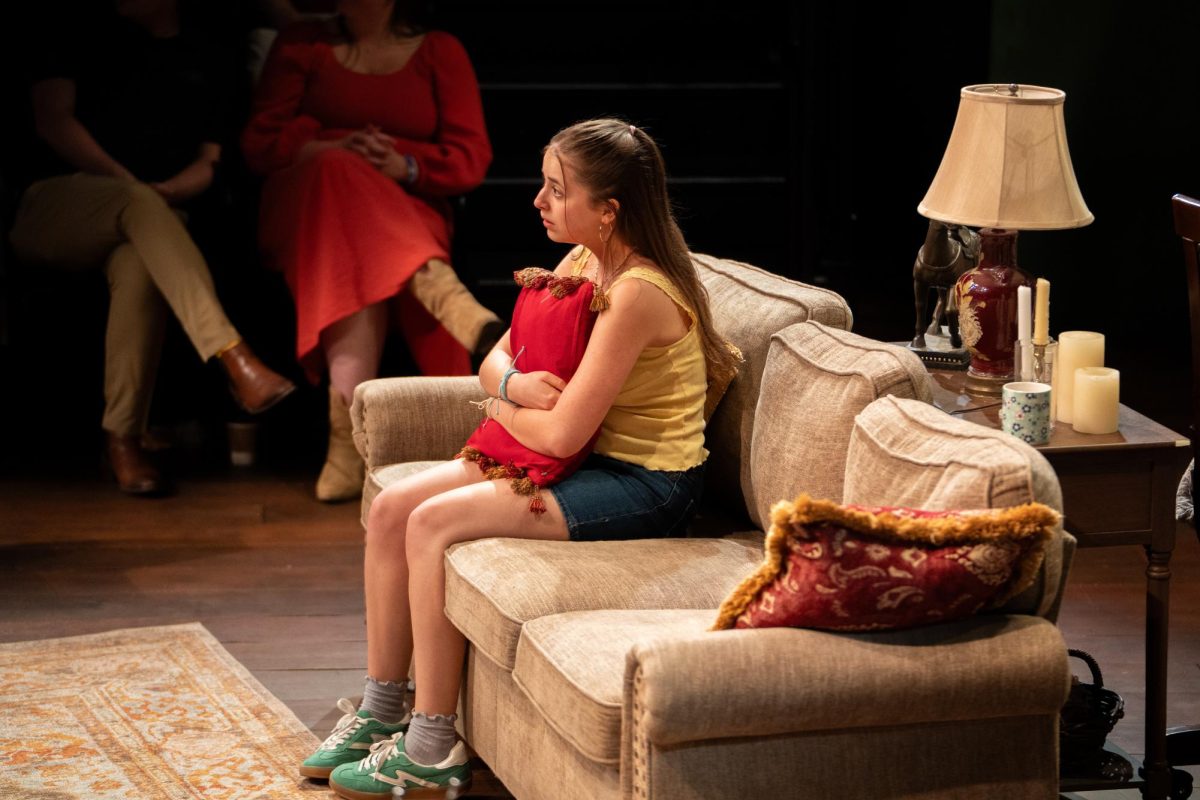


For most students, JDS musicals entail sitting respectfully in one’s seat watching others sing, dance and perform. But, in this year’s winter musical, “The 25th Annual Putnam County Spelling Bee,” the audience was not just watching. The musical not only encouraged audience participation, but required it, as multiple audience members were called up to the stage to compete in the spelling bee.
“The 25th Annual Putnam County Spelling Bee” is an improvisational comedic musical centered around a county spelling bee. There are ten contestants, six of whom are members of the cast, and four of whom were selected from the audience. The show is ultimately a coming-of-age story as the contestants discuss adolescence and share stories.
“It is just pure fun,” Director of Arts Education and musical director David Solomon said. “I think the cast has been smiling since the very beginning. They know they have a great show. One, because they’re so talented. Two, because the script is so funny and so strong.”
In addition to the six contestants in the cast, roles included three judges, a few parents and other spectators that made up a total cast of 29. Outside of the acting cast, there were also crew members, musicians and other adults who helped put this show together. According to Solomon, this musical was difficult to put on, as it required rehearsing different versions of the show depending on different audience responses.
“Putting on a show is a giant puzzle,” Solomon said. “Everybody has their little piece of the puzzle they’ve got to work on … And so to see everybody’s puzzle piece as it comes together is great.”
Junior Max Olin, who played William Morris Barfée, a leading role in the show, enjoyed playing a child in this production. Olin said he frequently plays adults in performances, due to his mature appearance, so he has appreciated the opportunity to play a more youthful character.
Olin said that the show was a team effort, especially when preparing for opening day. This meant compiling the necessary technology, costumes, sets and performing full run-throughs every day in the week leading up to the show. Olin also loved seeing actors in the show improve and enjoy theater, especially because the community was so positive and encouraging.
Rehearsal began in mid-September and took place four days a week from 4 to 6 p.m. The first week of rehearsal was spent learning the music, but as time went on, rehearsals focused more on running through scenes on stage. On an average day, all cast members reviewed music and other details of the show for the first hour, and for the second hour the actors with leading roles ran through the script.
“It’s really amazing seeing [an actor’s] progression, and it takes our breath away,” Olin said. “The theater experience really builds your confidence in a very effective way, and it’s really interesting seeing how it affects all of us.”
For senior and stage manager Ella Arking, being stage crew for the musical allowed her to participate in theater without actually being on stage. Arking was still active in the show’s creation, and part of her job included putting together a list of all necessary props, creating a microphone chart for every scene and recording blocking (movements by the actors) during rehearsals. In this year’s musical, Arking was even occasionally called onto stage at rehearsal as an improvised speller.
While an outside company made the set for this year’s musical, the stage crew, which consisted of over ten members, still had numerous tasks, including lighting, microphones and helping actors with whatever they needed backstage.
This year’s production was the first year the soundboard was completely student-run, with sophomore Gabe Waldman at the helm. While their work was more behind the scenes, the crew members still enjoyed the theater environment.
“There is a lot of positivity, especially on stage,” Arking said. “In every rehearsal, I’ll see people cheering for each other, even in auditions … Whenever anyone goes up, there’s so many cheers, there’s so much positivity and support. I see that a lot from the people on stage.”
Solomon believes the final piece of any production is the audience, as the cast reacts to the energy of the house, so he was very excited for the performances. According to both Olin and Solomon, since there was improvisation and audience participation in this musical, audience involvement was especially important and helpful. Audience members were encouraged to cheer, clap and participate.
“I’m particularly excited about the student matinee, because the JDS student body is so wonderful that they cheer on their peers,” Solomon said. “And I think the humor in the show is humor that they’re going to get. It’s goofy, it’s edgy, it’s silly and it’s a show about kids.”