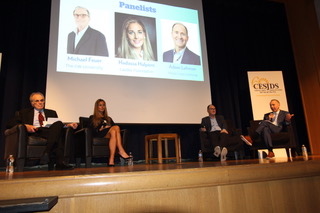

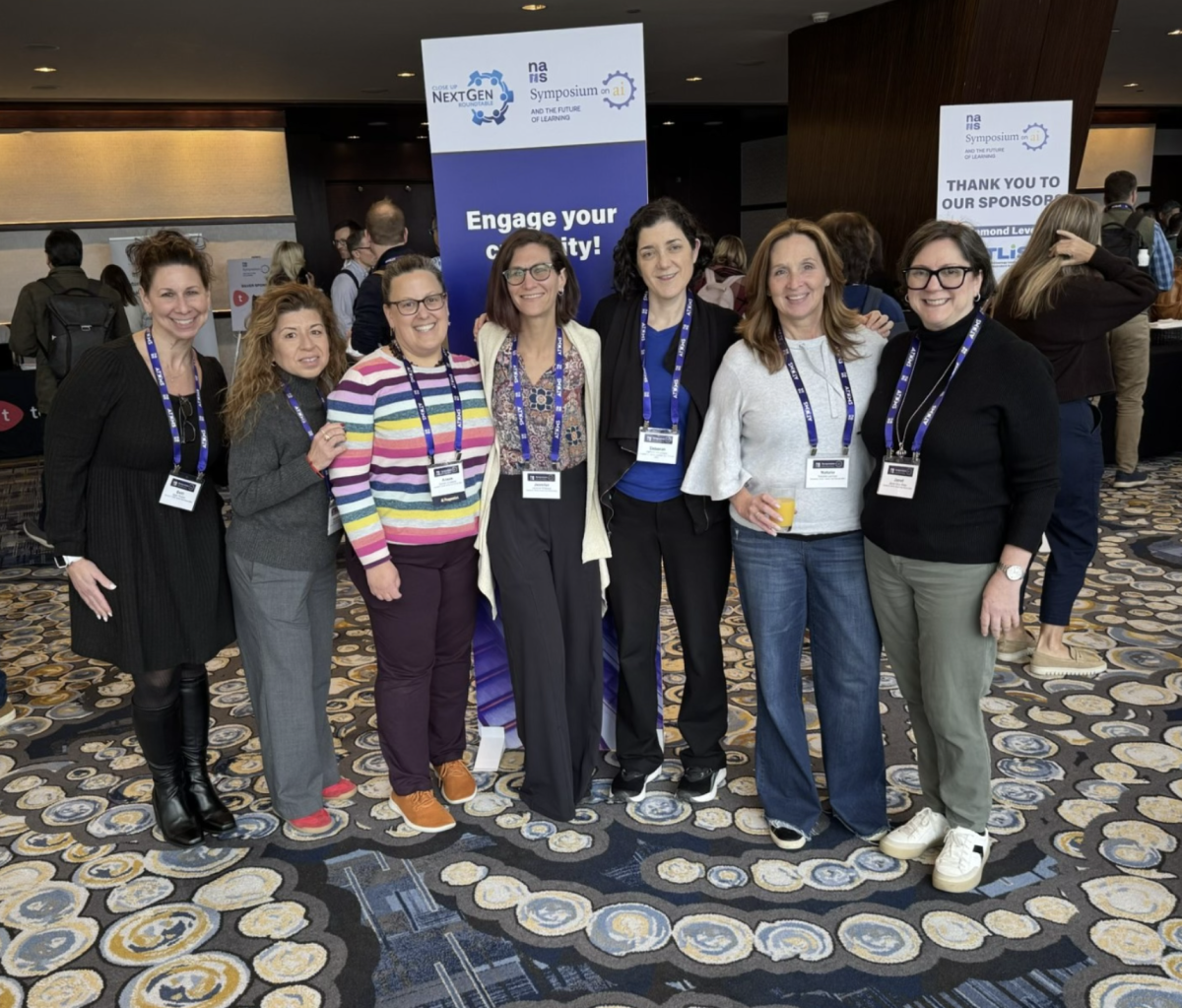
Seven CESJDS faculty members attended a summit on artificial intelligence (AI) held by the National Association of Independent Schools (NAIS) on Dec. 4-5. Hosted in Houston, the 2025 NAIS Symposium on AI and the Future of Learning was designed to equip independent schools with different tools and lessons in order to adapt to the changing landscape of AI.
The summit hosted various seminars and workshops, where attendees listened to lectures given by teachers, students, authors and researchers. They ranged from teaching about how to use different AI tools, to how AI can be applied to the workplace in a safe and beneficial way. JDS sent seven faculty members from both the Lower and Upper School, and they all used an app to customize their schedules.
“I was very excited that all divisions [of the school] were going to be exposed to the same information, because then we’re all on the same page throughout the entire school,” Instructional Technology Specialist and co-leader of the high school Professional Learning Community on AI Beth Poston said. “I think that’s really important, that we had a representative from instructional technology administration and the teaching staff.”
High school assistant principal Aileen Goldstein believes the summit presented promising opportunities for JDS to learn more about AI and its role within the academic and professional context. Goldstein was particularly interested in the seminars given by other schools about the ways they think about AI.
“It was awesome to be able to hear on the ground in a school what they’re doing and how they’re asking questions we’re dealing with,” Goldstein said. “It is such a great combination of the theoretical and the practical married together, and I really value the opportunity to hear from an administrator, a teacher and a student.”
One of NAIS’s primary points of emphasis was how AI fits into the philosophy of education. One such philosophy was described as the two lane approach: where one lane is any assignment or assessment done in class without any support from AI and the other lane is projects where AI is permitted, but the expectation of the final product is expected to be much higher considering the extra help the tools gave. Natalie Levitan, high school history teacher and leader of the high school Professional Learning Community on AI, appreciated hearing about these different philosophies.
“I think the fact that when it is used as a tool, we can actually produce really thoughtful and interesting projects or products, I think it elevates our ability to do that,” Levitan said. “AI does the grunt work, and then it’s human output.”
Goldstein and Levitan both faced the question of how AI can be used to help students and their work as educators. Levitan described feeling as though AI is often a “gray area” for students and teachers, as neither usually fully understands how they are using it, which can be a source of conflict. Through the summit, Levitan took away different methods on how to alleviate this confusion and distrust between teachers and students.
“You’re thinking about, ‘how are you manipulating AI?’ I hadn’t really considered that the user is the one that’s manipulating AI… I felt like I had more agency than I thought I had prior to the conference,” Levitan said.
One style of using AI Poston was particularly interested in was the sandwich method. This assignment technique is where students start by completing an assignment completely on their own, and then use AI to help support and polish their work. Students then complete the assignment applying the new insights gained from AI, but doing so without its use. That way, the work starts and ends with human thought in control.
In the future, Poston, Levitan and Goldstein emphasize the need to ensure students’ safety when using AI, and the importance of how teachers are presenting tools to students. Through the summit, they were able to learn how to think more deeply about how AI can be helpful for students and teachers, and how to best instruct students on its abilities.
“I think it’s an ongoing conversation,” Goldstein said. “I think it’s developing, and I think that we need to be flexible and fluid and figure out the ways that it works within our philosophy and approach to education, so that we’re preparing our students to go out in the world and be their best and do their best and be prepared.”