


Skip to Content
Categories:

Pour Decisions

How drinking is affecting teenagers today
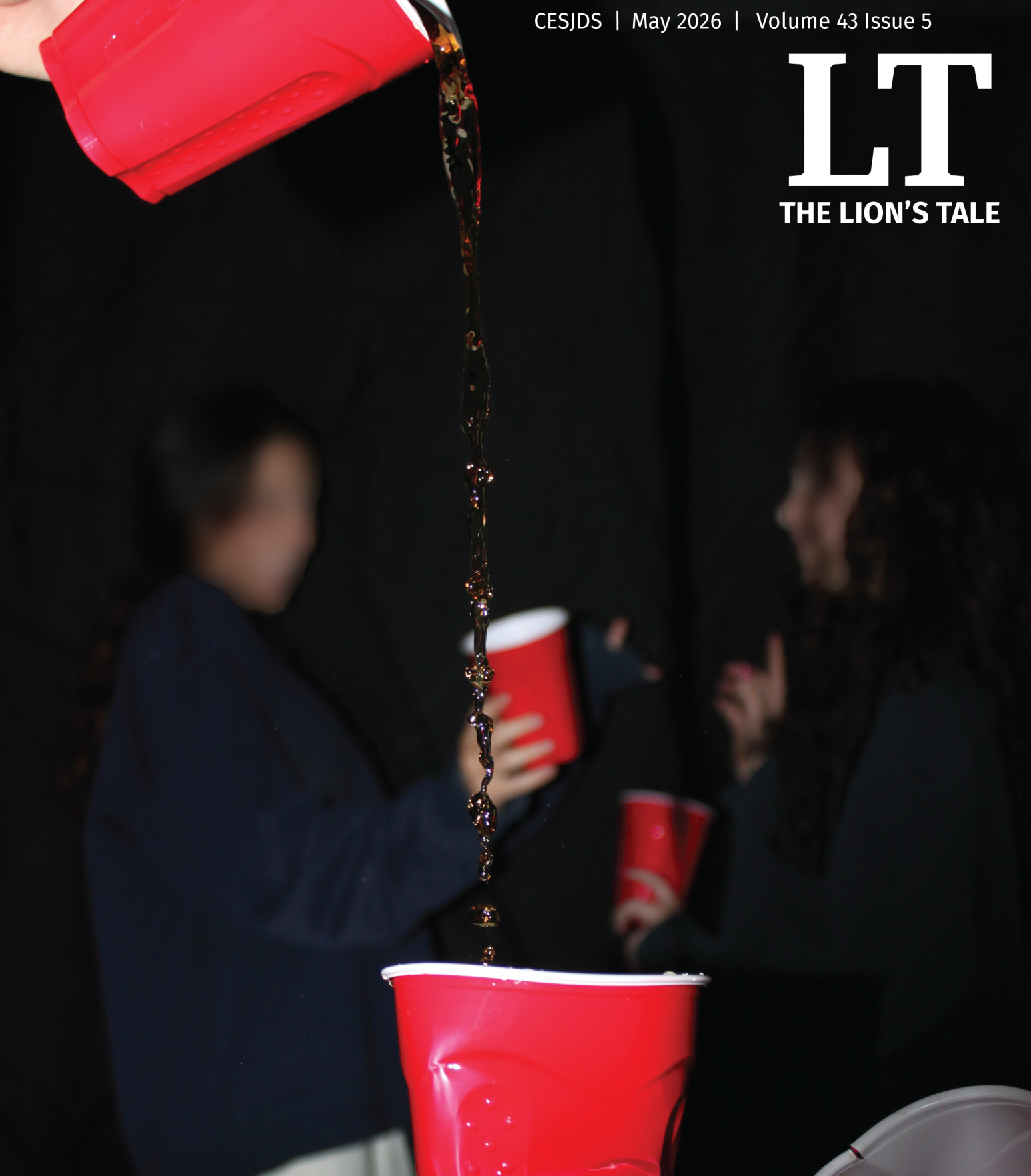
Teenage drinking is something prevalent in many adolescents lives. This is a photo illustration, not a real situation.
Lindsey Shapiro

The question of whether or not to drink is one that pops into many teenagers’ heads at some point in high school. While contrasting viewpoints can villainize the consumption of alcohol or encourage the practice, this dilemma is not an easy one to approach. 

Alcohol use among teens has significantly declined over the past few years. Consumption decreased 44% between 2000 and 2025, according to University of Michigan’s Institute for Social Research. And yet, teenage drinking remains a major factor in many teenagers’ lives. 

The Lion’s Tale created an anonymous survey of JDS high school students that aimed to better understand the patterns of teenage drinking by asking about how often students drink, where they do so and when they first started. This article explores these findings, along with student and parent perspectives, as well as expert insights to provide a fuller story of teenage drinking at JDS.

Survey of the JDS experience

While the underage consumption of alcohol is often discussed as a single issue, the teenage drinking experience varies widely based upon students’ personal choices. Frequency, setting and motivation are all components that can vary depending on the teenager. 

In the survey taken of 96 JDS high school students, including members of the class of 2026, making up 30% of the high school student population, teenagers were asked various questions about their drinking experiences.  The survey was a voluntary sample rather than a random sample; it is possible that this method impacted the results. 

When asked if they had ever drank alcohol recreationally, 50.5% said that they had while 49.5% said they had not. Among students who reported drinking recreationally, 41.5% answered that they drink a few times a year, while 22.6% answered once a month and 11.3% answered once a year or less.

Drinking most commonly takes place in social settings, with the majority of students who drink saying that they drink at parties. The second most common place was at a friend’s house. Additionally, 39% of students who drink reported drinking with family, which may include religious settings. 

The ages at which adolescents started drinking varied, with 52% of those who reported having consumed alcohol starting between the ages of 15 and 16 and 26% between 13 and 14. The percentage of students who started drinking before the age of 13 is 12% while those who began at 17 or older is 10%. 

Of those who said that they drank recreationaly, 72% reported drinking primarily with friends with 55%  reporting getting alcohol from friends. Of the students who said that they drink alchohol, 22.7% said that it was already in their houses. 

Why teenagers drink

Whenever the topic of teenage drinking is brought up, a large focus is on the incentive behind it. Whether it is because of peer pressure or the novelty of being drunk, teenagers drink or abstain for a variety of reasons.   

Junior Solomon Ballas chooses not to drink and holds a negative view on teenage drinking. He believes that outside of religious circumstances, it is not acceptable to drink underage, as it is against the law. Beyond just following the law, Ballas believes that teenagers should follow their values, rather than external factors like peer pressure, when approaching the issue. 

“I think that teenage drinking can be an attractive thing,” Ballas said. “It can be tempting and enticing to try it and see what happens … Just know what’s right and know what you believe in and know your values. And when you believe in the right thing, you can do that right thing.”

Peer pressure is also often posed as an answer to why why teenagers drink. However, according to the survey, only 1.1% of JDS students answered that they often feel peer pressure to drink. In contrast, 17.2% of students answered that they sometimes do, 32.2% answered that they rarely do and 49.4% answered that they never do. 

These numbers suggest that at least in the JDS community, peer pressure is not a significant factor that entices students to drink. A JDS student, who requested to remain anonymous, explained that they see drinking as an important social experience for high school students,  especially before going to college. 

“I think it’s important to explore drinking in safe settings, but also it’s just really fun,” they said. “I think there’s a lot of fun experiences that come with it.” 

Kriya Lendzion, Addictions Clinician, Prevention Specialist and drug educator, owns her own private practice working with individuals going in “self-destructive directions” with drugs. Another important part of her job is speaking to high school students about the dangers of subtance abuse. Lendzion came to speak to JDS high school students as a part of a Wellness Wednesday program in February.

According to Lendzion, teen brains are especially tuned to seek dopamine and belonging. Lendzion explained that when alcohol is constantly portrayed in the media as a fun form of connection, teenagers quickly link alcohol with those feelings. 

For teenagers, alcohol can feel like a stimulant at first rather than a sedative, Lenzion said. Since they do not feel sedated as quickly as adults, teens are more likely to keep drinking. 

“There’s that whole term ‘buzz,’” Lendzion said. “Getting a ‘buzz,’ catching a ‘buzz.’ It actually makes sense for an adolescent because you guys can feel a little bit more energized by it.” 

Lendzion also said that the marketing of alcohol products is specifically geared toward teenagers. Many alcohol products are marketed as “spiked” versions of childhood drinks, like lemonade and fruit punch, and brands often use bright colors and sweet flavors, making alcohol appear less dangerous and more fun. 

In addition to targeted marketing of alcoholic substances, Ballas believes that pop culture in America is particularly good at romanticizing addictive substances. 

“Alcohol is portrayed as a way to relax and open up and have a good time, in films especially,” Ballas said. “And I think sometimes the wrong message can be taken away from that, and [drinking] is seen as a cool thing and something that you have to do.”

Lendzion said that teenagers believe alcohol is a way to cope with stress, anxiety, anger or pain. The appealing advertisement of alcohol makes it seems like the easiest solution to these negative emotions. 

“[Alcohol] speaks to an adolescent brain, and what [teenagers] are looking for and noticing, and so I think you’re more susceptible to the brainwashing of that without realizing,” Lendzion said. 

Parent perspectives on drinking

While the traditional view of parents when it comes to drinking is of strict opposition, in reality family opinions differ, making the issue more nuanced. In the survey, almost 62% of JDS students say their parents are aware that they drink. 

A parent to two recent JDS alumni, who asked to remain anonymous, said that teenagers might be more susceptible to the appeal of drinking due to the carefree and risk-ignorant nature of adolescents. But they also believe that parental ultimatums against alcohol can be a factor that further pushes teenagers to drink. 

Even without additional appeal that might motivate teenage drinking, the parent said that teenagers are attracted to the idea of alcohol purely because it is an opportunity to try something new. 

“Young people want to try things,” the parent said. “They want to act like they’re older, right? They want to be able to seem mature and adult, and they want to take chances because that’s fun, and … it is very common for kids to just want to do or try things that they’re not supposed to, to try to cross lines. It’s fun. It’s exhilarating.”

Because alcohol consumption is such a socially relevant topic among many teenagers, the approach taken by students and parents when navigating the topic is often much more complex than just a simple yes or no. According to the anonymous parent, even if one is opposed to teenage drinking, it is important to set realistic expectations and prioritize safety when discussing the topic with one’s child. 

Sarah Trauben, mother to junior Judah Trauben and freshman Sasha Trauben, believes that it is best to “kick the can down the road” in regards to teenage drinking until the brain is more developed. Despite wanting to prevent drinking, Trauben understands that it happens, and therefore believes the most important thing is to be cautious and, specifically, never get into a car with a driver who has been drinking. 

Trauben believes it is important to discuss and emphasize the dangers of underage alcohol consumption, while also recognizing that teenage drinking is a real and frequent occurrence in high school. Trauben also believes that education around the topic is crucial, which she think JDS provides in a productive way. 

“I think that this whole wellness education in school didn’t exist in the way that it [did] 10, 15 years ago,” Trauben said. “And so I think that there are additional sources for kids to get educated on this topic, not just rely on their parents, which is a good thing.”

Dangers of teenage drinking

A major point of conversation when it comes to underage drinking is its dangers. Teenage minds and bodies process alcohol differently than adults, leading to many different effects.

In addition to the short-term effects of drinking, such as blacking out, vomiting and dizziness, there are also major negative long term impacts of drinking, including an increased risk of cancer as well as liver failure.

The Centers for Disease Control and Prevention (CDC) reports that around 4,000 people under the age of 21 die of excessive alcohol use each year. In addition, around 20,000 adults in the U.S. die from alcohol related cancers each year. 

“It’s just hard when I watch really beautiful kids with tons of potential destruct themselves and I can only do what I can do,” Lendzion said. 

There are also negative effects for teenagers while they are actively drinking. Young people who drink alcohol are more likely to engage in behaviors that can lead to injuries and other health conditions, such as alcohol-poisoning. They are also more likely to experience social, academic and legal issues, according to the CDC.

Other consequences include long-term damage to the brain’s executive functioning, Lendzion said. While drinking, teens have impaired judgement, weaker impulse control and reduced big-picture thinking. Their decision-making skills are also often impaired. 

“I see choices that they wouldn’t make when they were sober, just doing things that they don’t believe in doing, that really contradict their own values and their own beliefs,” Lendzion said. “Because as soon as you put a drink in the body … it starts to shut down the judgment center … of good idea, bad idea, healthy, unhealthy, in line with who I want to be or not.”

As a former addict, Lendzion has a unique perspective on the dangers of drinking. She was in rehab at age 19 and managed to stay sober after being dependent on alcohol from early adolescence. Lendzion uses this experience in helping others recover as she has seen the negative effects of drinking first hand. 

According to responsibility.org, early drinking is a risk factor for alcohol use disorders. Adults who had taken their first drink of alcohol before the age of 15 were 6.5 times more likely to experience an alcohol use disorder like binge drinking or dependancy than those who didn’t start drinking before the age of 21. 

“Once a connection is made at this age, because your brains are like molding clay, it really hard wires stronger than it does for us [adults],” Lendzion said. “So if you make a positive connection, if you have an experience and you like it … you’re more likely to fall for that.”  

Takeaways

Teenage drinking, as the JDS survey and external perspectives show, is not a one-size-fits all experience. For some students, it is part of their social environment. For others, it is a choice they consciously avoid. 

At the same time, the risks are clear. From immediate health and safety concerns to long-term impacts on the developing brain, experts like Lendzion warn of the consequences of drinking at a young age. 

Ultimately, the question of whether or not to drink is answered differently by various members of the community. Regardless, the topic is complex and requires consideration of all the potential outcomes. As students navigate high school and increasingly gain independence, understanding both the social appeal and real dangers of drinking can help adolescents make choices that prioritize their physical and mental well-being.

More to Discover
About the Contributors

Leora Blumenthal
Leora Blumenthal, Editor-in-Chief
Leora is a member of the Class of 2027 and serves as a current editor-in-chief. She joined The Lion’s Tale as a freshman and previously served as A&E editor. Her favorite piece she has written for The Lion’s Tale is “A league of their own.” Outside of The Lion’s Tale, Leora plays volleyball, is a co-president and founder of the French Club, and volunteers at the Gudelsky swim program. In her freetime, Leora enjoys reading and hot yoga. 

Jordana Dauber
Jordana Dauber, Features Editor
Jordana is a member of the Class of 2027 and serves as the current Managing Editor. She joined The Lion’s Tale as a freshman and previously served as Features editor. Her favorite piece she has written for The Lion’s Tale is “Dancing with the stars: Season 33 check in.” Outside of The Lion’s Tale, Jordana plays volleyball, basketball, and softball and is an editor on her school’s science journal. In her freetime, Jordana enjoys reading and doing puzzles.

Lindsey Shapiro
Lindsey Shapiro, In-Depth Editor
Lindsey  is a member of the class of 2027 and is serving as the In-Depth Editor for 2026. She joined The Lion’s Tale as a freshman and previously served as an opinion editor. Her favorite article that she has written is “Opinion: The cancellation of ‘Jimmy Kimmel Live’ is a threat to First Amendment rights.” Outside of The Lion’s Tale, Lindsey is Editor-In-Chief of the Melting Pot world languages literary magazine, a member of Model UN and is in Shir Madness. In her free time, Lindsey enjoys attending BBYO programs and baking.