




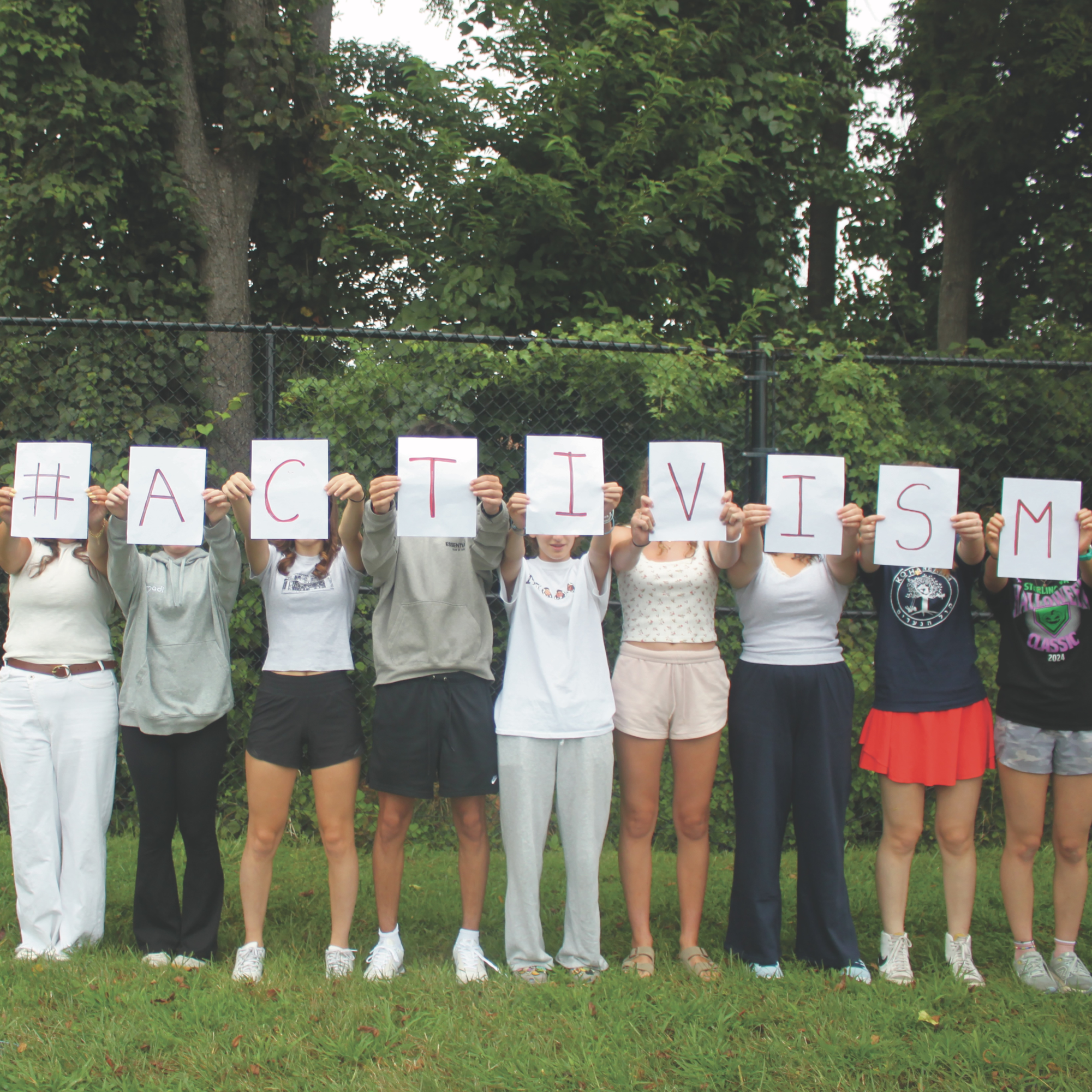

In an age of misinformation and slacktivism, it can be hard to find real, meaningful ways to get involved in activism. However, there are many accessible and impactful ways to participate in valued causes. Choosing a cause is a logical first step.
After choosing a meaningful cause, the next step is education. Waksman believes that educating oneself is crucial to being a credible activist. While Goldrich spoke about misinformation delegitimizing social causes, Waksman believes that education allows aspiring activists to understand their cause and teach others while combating misinformation.
“Education is really long-term,” Waksman said. “It impacts people. It gives them skills, gives them knowledge. Then they can be learning the skills to teach themselves or teach others. It’s really a longer term impact. There are other forms that people take [that] are a little more flashy, a little more quick, which has its moments for sure. [But] I’m thinking about the change I want to see in our country long term, I think education is the way to make it happen.”
After taking time to educate oneself and beginning to petition and protest, the next step is to organize around the cause. Recently, organizing over social media has been easier than ever to get people united around a cause. However, organizing is also important for in-person events that galvanize support and allow for networking and building connections. A big component of a successful activist group is strength in numbers. Therefore, an effective activist is one that is good at rallying large numbers of people together for a cause.
“[An effective activist is] an organizer of people,” Atwood said. “It’s about organizing groups of people together for a common purpose and pushing for change … the hallmarks of a good social activist [are] the organizing ability, the energy, the vision and the willingness to break established norms.”
There are many other ways that individuals can be activists. One such way is getting in contact with politicians and policy makers. When organizing for policy, Fagin recommends moving from the bottom to the top, starting on the local level and moving up in order to rally smaller communities first. Fagin thinks that this strategy is more impactful for individual communities.
Regardless of how students choose to involve or not involve themselves in activism, Atwood believes it is crucial to remember that Americans are fortunate to have the freedoms of petition, assembly and speech. Despite the changing nature of activism, civic participation is always a sign of a healthy democracy.
“We have the privilege of living in a society that encourages civic participation,” Atwood said. “We are not mindless, oppressed people that have to accept the world as it is given to us. And in our society, we have the opportunity as citizens to be engaged and be impactful members of our community, rather than just going along with what’s there. And I think all of us should find our own ways of being active, engaged citizens, in ways that feel right to ourselves and in ways that we can be proud of.”