
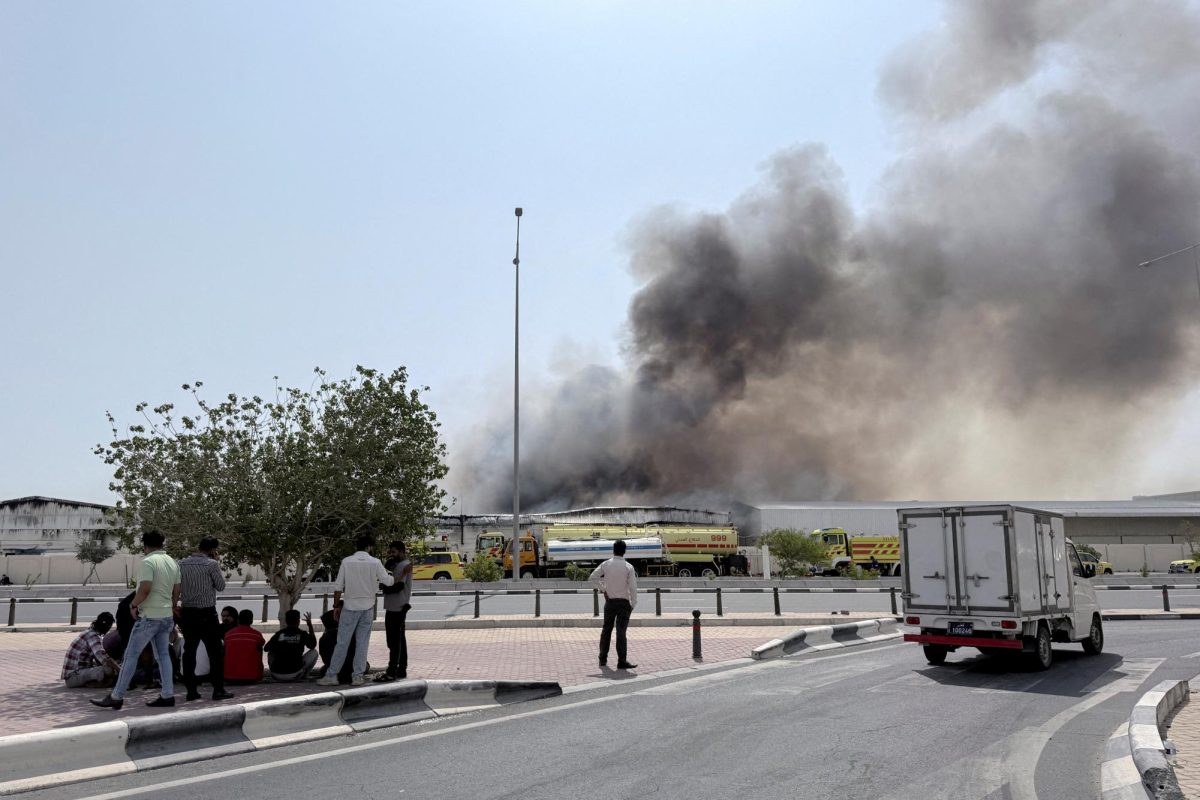
The conflict involving Iran has led to widespread concern about global escalation, as some have labeled it as “the start of World War III.” While these fears are understandable, this situation does not meet the historical or political criteria of a world war, and defining it as something it is not exaggerates the scope of this conflict in harmful ways.
Regardless of how it is labeled, the conflict in Iran is serious and involves real human and geopolitical consequences. This situation is by no means unimportant. The issue is that describing it as a world war changes how people interpret its scale and risks. That kind of framing distorts public understanding and leads to reactions driven more by fear than facts. That is why accurate language matters when discussing past and current conflicts.
Historically, world wars were defined by global military action, alliance-driven escalation and the collapse of diplomacy. The current conflict shows none of these characteristics, as it is contained within a single region. Aside from the United States, there is a lack of major power alliances and diplomacy is still present, making this comparison misleading
This is a regional conflict. The fighting is geographically concentrated in the Middle East, primarily involving Iran, Israel and neighboring territories. According to the Center for Strategic and International Studies, Iran struck 14 countries in the first days of escalation all in a singular region. Although it is true that Iran has struck U.S .bases, which could contribute to why some people would refer to this as a global conflict, all strikes were in the same region and there are no real signs of it spreading beyond that. Beyond the US, no global powers are willing to put boots on the ground for Iran.
Additionally, the lack of peer-to-peer global alliances also separates this conflict from past world wars. While alliances do exist, unlike the First and Second World Wars, they have not triggered widespread, multi-theater direct combat between major powers. Iran is isolated with limited reliable allies willing to fight on its behalf.
The North Atlantic Treaty Organization has not entered the conflict as a combat force and has taken only defensive actions, such as intercepting threats. In fact, according to the Public Broadcasting Service, the only support Iran is getting from any global power is through satellite data from Russia, which provides information on where American ships are, not on troops or on engaged combat operations.
The opposing argument focuses on the global consequences of this conflict. Although oil prices have surged dramatically, and energy markets have been disrupted worldwide, this is only a global impact of a regional war. However, global economic impact alone does not define a world war. The conflict still lacks mass troop mobilization across continents, direct conflict between global superpowers and a formal alliance system activating a full-scale war.
Additionally, ongoing diplomatic efforts indicate that escalation remains contained in the Middle East. Frequent ceasefire deals, negotiations and peace talks, often mediated by outside countries, suggest a clear effort to prevent this conflict from spreading. According to Reuters, a two-week ceasefire was even negotiated during the initial escalation.
International organizations continue to hold discussions in an attempt to de-escalate. In true world wars, diplomacy largely collapses. Here, it remains highly active and central to how countries are responding to this conflict.
While the conflict in Iran is serious and should be taken as such, it should also be understood for what it is. Calling it World War III exaggerates its scope and distracts from what is actually happening. It is more important than ever to evaluate conflicts based on evidence, scale and historical context instead of relying on dramatic labels that risk creating unnecessary panic and misunderstanding.