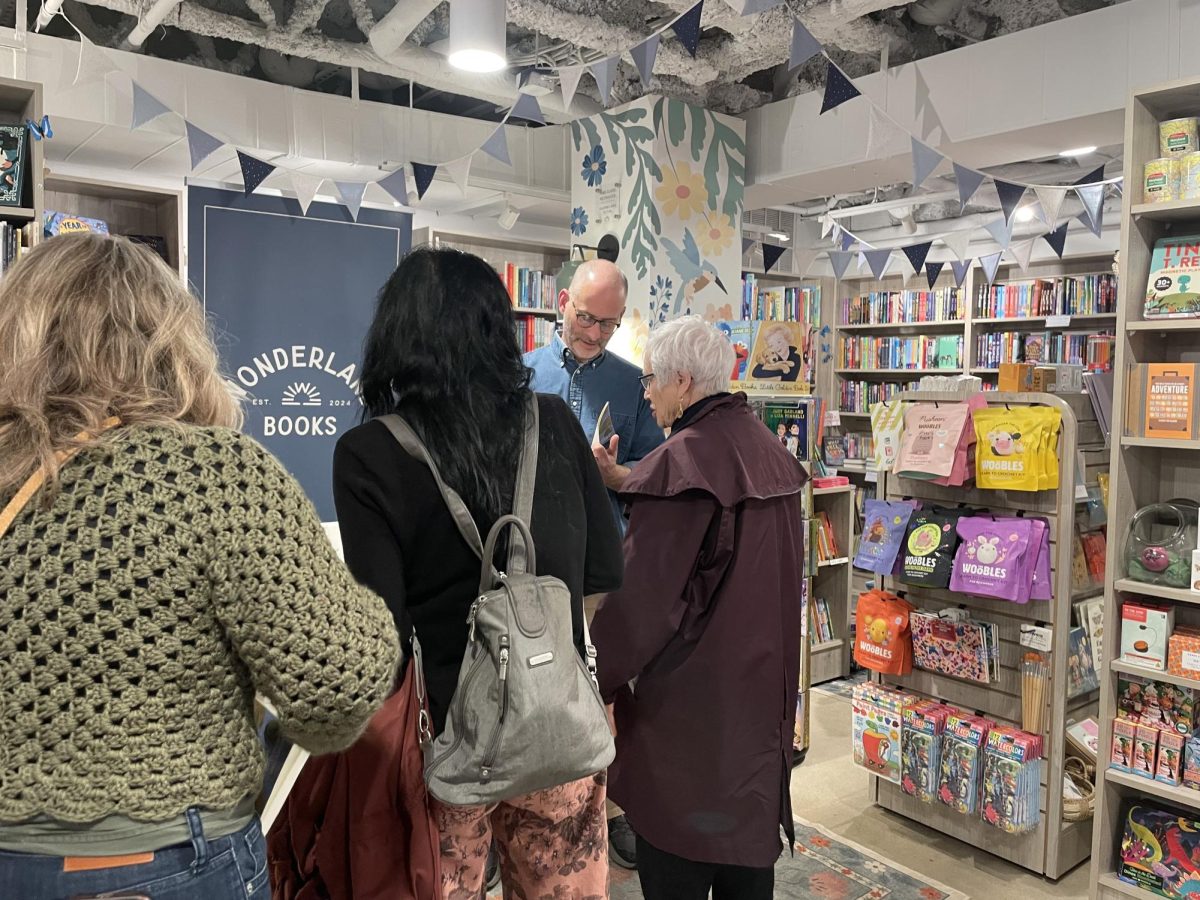
Conversation and energy buzzed throughout the room on March 12 at Wonderland Books as community members gathered to hear novelist and short story writer Michael Lowenthal speak about his new book, Place Envy.
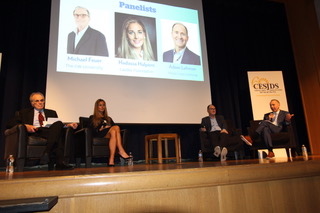
After an introduction by co-owner of Bethesda’s Wonderland Books Gayle Weiswasser, Lowenthal sat down for a conversation with Sarah Wildman, an opinion editor and writer at The New York Times. Along with fellow co-owner Amy Joyce, Weiswasser coordinated the event after Lowenthal reached out to them, asking for a place to speak. For Weiswasser, hosting authors with varied backgrounds is central to the shop’s identity.
“I think it’s always important to present a diversity of perspectives, especially at a time when we think that diversity of perspectives is decreasing across the country,” Weiswasser said. “That’s one of the vital purposes of a bookstore.”
The event was structured like an interview, with Wildman asking Lowenthal questions about the themes and events in his book. The conversation moved from Lowenthal’s title choice to descriptions of his childhood, focusing on themes of belonging and identity as a queer individual in the 1990s.
The book itself focuses on those key themes, diving deep into Lowenthal’s quest for orientation in the world as an agnostic Jew, the grandson of Holocaust refugees and a queer man. Having grown up in the Greater Washington area and attended high school at Bethesda Chevy Chase High School (BCC), Lowenthal enjoyed being able to return to his hometown and reflect on the journey he wrote about, where it started.
“A lot of the things I’m writing about in the book relate to things that happened when I was at high school at BCC, and living in Chevy Chase,” Lowenthal said. “It was intense and exciting. It felt like a full circle moment.”
Throughout the interview, Lowenthal read snippets from his book, which, unlike his past novels, was the first nonfiction book he has written. Formatted as a collection of essays, the book follows his family, his many travels and the people he met along the way.
The exploration into family history and personal identity occupied most of the evening. After almost an hour of dialogue between Lowenthal and Wildman, the event shifted to a Q&A session, during which several of Lowenthal’s colleagues, friends and family asked questions.
Among those in attendance was Mary Homer, a former high school classmate and Lowenthal’s first girlfriend. For Homer, the event was a chance for her to support a lifelong friend while engaging with the discussion led by Wildman and Lowenthal. She especially appreciated the way the conversation addressed the complexity of growing up with privilege while still facing personal struggles with identity and belonging.
“I thought the conversation was great,” Homer said. “It was nice to hear the description about privilege and just the right to feel certain ways about your life.”
After the conversation and questions concluded, the event switched to a book signing, with copies of the book available for purchase. I think books fundamentally serve to connect us and to make us feel empathy with other people’s experiences and to learn about other people’s worlds. To have a public reading like that, where people come together in the same room, is a great fulfillment of the potential that books have to bring people together. According to Lowenthal, having an in-person author event was a profoundly meaningful experience.
“I think books fundamentally serve to connect us and to make us feel empathy with other people’s experiences and to learn about other people’s worlds,” Lowenthal said. “To have a public reading like that, where people come together in the same room, is a great fulfillment of the potential that books have to bring people together.”