
Today, discourse is dominated by algorithms that reward outrage over understanding, passion over truth and clicks over careful thought. Though some might dismiss Instagram Reels and TikTok debates as harmless distractions, these platforms shape discourse and culture that, in turn, shape politics. In a republic, the way we talk to each other matters. Substantive discourse sustains it and shallow conversation destroys it.
History shows the dangers of letting emotion override reason. Athens, the birthplace of democracy and philosophy, put Socrates to death for challenging popular opinions and exposing unsettling truths. Similarly, demagogues, from Catiline to Hitler, thrived by inflaming passions instead of addressing the real problems faced by their societies.
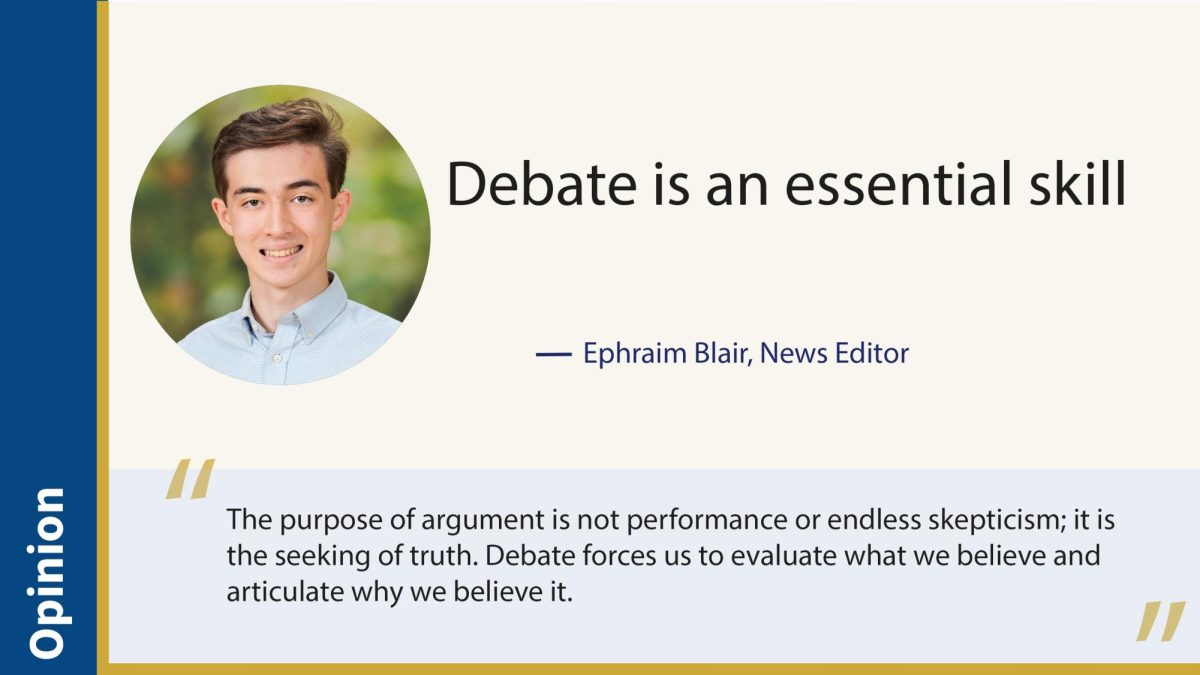
But debate is more than just asking questions. The purpose of argument is not performance or endless skepticism; it is the seeking of truth. Debate forces us to evaluate what we believe and articulate why we believe it. Most importantly, it allows citizens to resist manipulation, distinguish fact from fiction and hold the government and one another accountable.
The system of government devised by the Constitution was designed to elevate reason over passion and prudence over faction. Yet, the Founders believed citizens needed to actively participate for checks and balances to work. They wrote the First Amendment to protect and elevate public discourse, allowing, as James Madison writes in Federalist 49, “the virtue and intelligence of the people” to secure free government.
In the same vein, the elevation of good ideas ought to come at the expense of bad ones. As writer G.K. Chesterton wrote, “The object of opening the mind, as of opening the mouth, is to shut it again on something solid.” Debate trains this exact skill. It forces us to separate fact from fiction and resist being swept away by impulse and emotion.
From my experience, debate also offers numerous individual benefits. At its best, debate is not merely arguing; it is critical thinking expressed through language. Debaters sharpen their reasoning skills through evaluating evidence, distinguishing strong arguments from weak ones and recognizing logical fallacies. By seeking opposing viewpoints, people gain a better understanding not only of others but also of themselves.
Competitive debate has taught me that defending my beliefs requires more than conviction; it requires justification. It has exposed me to unfamiliar perspectives and topics. By researching and debating issues ranging from low-Earth-orbit satellites and Somaliland, I have learned the value of being able to argue either side of a resolution, regardless if I agree with it personally.
Debate does more than expose false self-assuredness; it equips students with lasting confidence and sharpens their command of language, according to Forbes. Successfully persuading an audience or a judge requires a blend of discipline and rhetorical flair that comes with practice. I have found that the ability to think on my feet and respond under pressure extends far beyond the podium, proving invaluable in the classroom, workplace and public forum.
Self-government requires an engaged citizenry capable of reasoning toward the common good. Debate cultivates the habits of mind that empower individuals to participate meaningfully in that process and confront the problems that we face. In a time when superficial exchanges too often replace serious debate, the ability to disagree honestly and reason together is not merely an intellectual exercise. It is a civic necessity.