
Scroll on social media or watch cable news for five minutes and it’s hard not to feel like the country is divided in two. Whether it’s “Red vs Blue” or “Right vs Left,” politics are framed this way before policies are mentioned and it feels like division is certain. But America’s political divide is often overstated with the average citizen holding less extreme views than perceived.
“Affective polarization,” the growing distrust and dislike toward an opposing political party, is undeniably high. However, hostility between groups does not mean that Americans have true ideological disagreements on every policy. In many cases, the perception of extreme disagreements outpace the reality.
According to the Carnegie Endowment, many Americans believe that members of their opposing political party hold more dangerous or radical views than it actually does, a phenomenon described as the “Perception Gap.” Ask Democrats what Republicans think, or Republicans what Democrats think and you’ll usually hear an extreme version of their beliefs
A study by The More Common on “False Polarization” shows a similar pattern. Americans tend to overestimate how extreme the other side’s views are by a significant margin. One survey found that Americans tend to overestimate the extremism of the opposing party by about 30%. When accurate information was shown to the participants, hostility decreased. But this raises the question, how much of what we interpret as division is actually rooted in misperception?
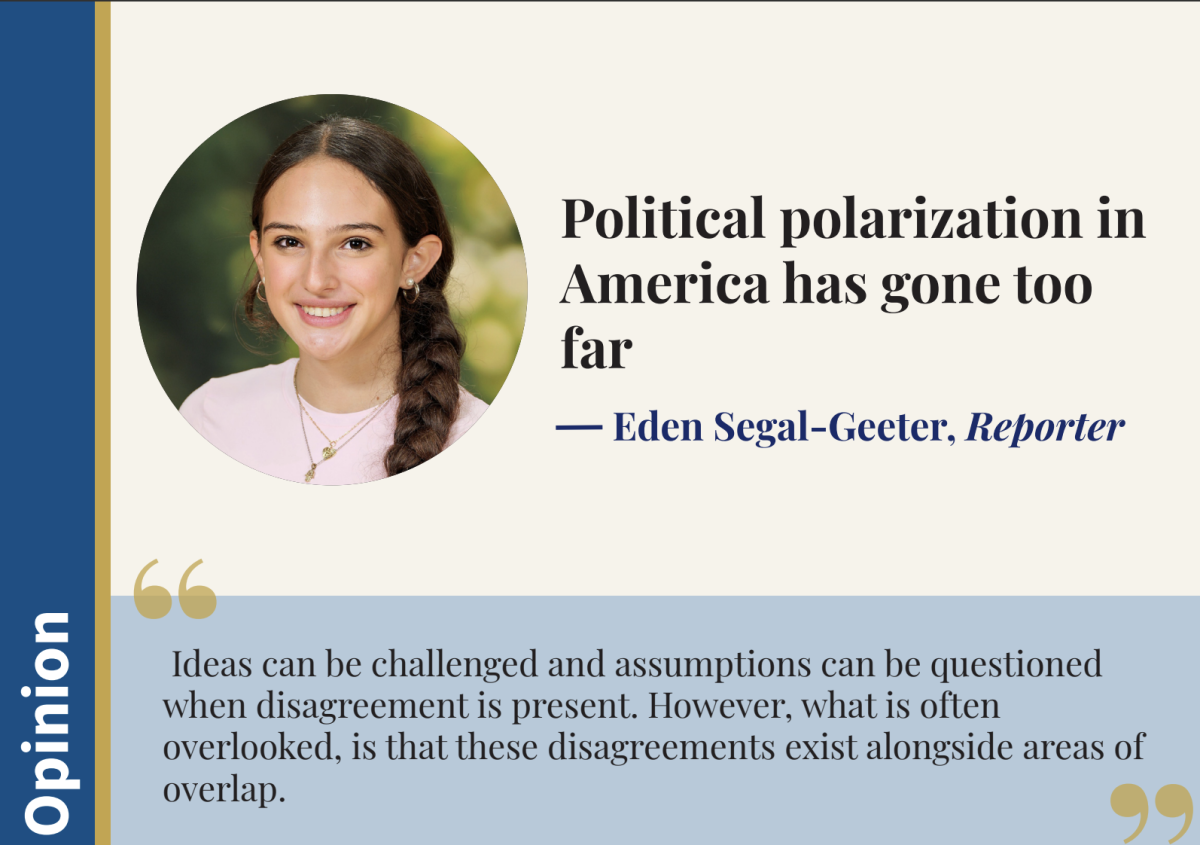
This is not to suggest that Americans agree on everything. But disagreement on some issues doesn’t have to result in total ideological separation and hatred. In many ways, disagreement is necessary to a democracy. Ideas can be challenged and assumptions questioned when disagreement is present. However, what is often overlooked, is that these disagreements exist alongside areas of overlap. Many citizens hold mixed views that do not fit neatly into party categories.
For example, according to Pew Research, large majorities agree that gun violence is a serious national problem while also supporting the right to own firearms. Many express support for government involvement in healthcare but worry about excessive government spending. At the same time, most Americans back free markets while believing that large corporations have too much power.
Additionally, according to Gallup, the majority of Americans aren’t ideological purists, but instead people with combinations of beliefs that don’t align perfectly with either party. But this overlap doesn’t make good television, nor does it get clicks and views; extremes do.
A huge part of the perception that America is so divided can be credited to cable news and social media. Most news networks cater to specific political audiences, and they reinforce what the viewers already believe because it keeps them coming back. Social media platforms work the same way; emotionally charged content is amplified by algorithms because those kinds of videos get the most engagement.
This means that over time, the most extreme voices are heard the most, even when they only represent a small fraction of the American population. Studies by The Pew Research Center further this idea by showing that Americans who are highly politically engaged online are significantly more polarized than the general population.
Some argue that rising hostility proves that America is ideologically fractured, and that concern is valid. However, research from UCLA suggests that division comes less from policy differences and more misperceptions about the other party because of selective exposure to polarized content.
In any democracy, disagreements are inevitable, but by ignoring overlap and amplifying extremes, media and political narratives transform manageable conflicts into perceived incompatibility. Eliminating disagreement is not the answer: it requires seeking nuance, questioning stereotypes, diversifying information sources and making space for complexity. Recognizing shared values can help us realize that we are not too divided to understand one another.