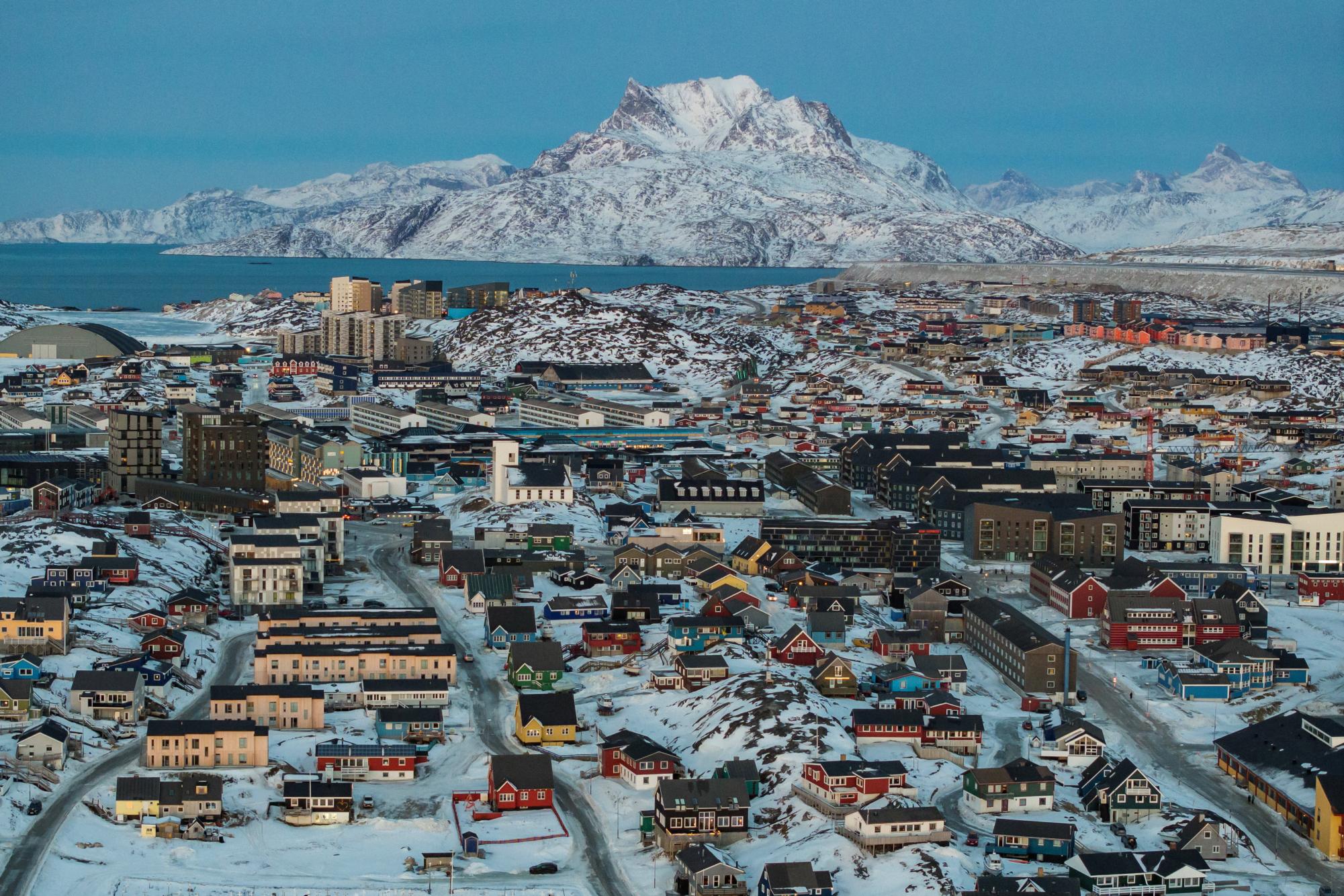
When Secretary of State William Seward agreed to purchase Alaska for $7.2 million from Russia in 1867, critics dismissed Alaska as a “polar bear garden.” History proved them wrong. Alaska has become indispensable to American national security, energy independence and Arctic dominance. Today, Greenland presents a similar opportunity. The United States needs Greenland for its strategic resources and global influence.
From the Louisiana Purchase to Texas and California, American statesmen have historically expanded the nation for strategic advantage, achieving it through foresight, treaties and conquest–not niceness or abstract moralism. Greenland has been part of that vision for over 150 years. In the 1860s, Seward proposed purchasing Greenland to secure the Arctic, and American explorers discovered its distant coasts and resources, laying the groundwork for an almost successful purchase in 1917.
Greenland contains some of the world’s highest concentrations of resources essential to modern technology, defense systems and strategic supply chains. Yet China dominates rare earth mineral extraction, weaponizing supply chains against American allies. As America is expanding its extraction and stockpile of rare earth minerals, Greenland will prove to be critical as its resources are becoming extractable as glacial ice melts.
Opponents cite the acquisition’s high cost, from $12.5 billion to $700 billion, but conservative estimates place Greenland’s oil and raw mineral value at $4.4 trillion, far exceeding upfront investment. Nevertheless, the value of foreign policy decisions cannot be measured solely in dollars and cents. Greenland offers America a strategic Arctic advantage, and, during World War II, American occupation prevented the Nazis from staging a ground invasion of America.
Many have claimed that America’s current attempts to acquire and expand influence in Greenland will weaken the North Atlantic Treaty Organization (NATO). However, America’s 10,000-man presence in Greenland was far greater throughout the Cold War than it is today. President Harry Truman, the chief architect of NATO, sought to purchase Greenland for $100 million in gold and secured the perpetual right to station U.S. troops.
The Danes acknowledged this was not merely a power grab by America: it was beneficial to Denmark, which lacked the ability to defend Greenland and has relinquished much of its direct power over the island. Yet today, our Danish allies say that Greenland is not for sale while continuing to take American money and military support for granted.
America is a nation, not a charity, and it is in our interest to counter our mutual geopolitical rivals. In collaboration with Russia, China has been making aggressive moves to expand its influence in the Western Hemisphere, buying land to conduct surveillance on American and NATO bases. This cannot be allowed to continue unfettered.
Today, Greenland is central to American security, perhaps even more than it was during the Cold War. Situated at the geographic heart of the Arctic in Greenland, America’s Pituffik Space Force Base is America’s northernmost military base. It is the backbone of America’s missile defense systems that defend the homeland, as well as our Canadian and European allies.
While the method of expanding U.S. influence can be debated, the strategic imperative is undeniable: Greenland is essential to securing supply chains, defending the homeland and reinforcing our allies in a way they cannot do themselves. Ensuring U.S. primacy in Greenland is not a rupture in the American global order; it is a return to the longstanding diplomatic principles that made America prosperous, secure and dominant.
Con
Since immediately after World War II, the United States has been trying to purchase Denmark’s territory, Greenland, without success. The goal was to gain access to its convenient location in the middle of North America, Europe and the Arctic for defense, and for use of its natural resources that the U.S. does not have. At a North Atlantic Treaty Organization (NATO) meeting in Davos, Switzerland, in early January 2026, President Donald Trump repeatedly stated his intention to take over this territory. For the good of the U.S., I hope that this plan will also be aimless.
The acquisition of Greenland would be detrimental to the U.S. for many reasons and would simply make the U.S. appear even worse than it currently does. It would severely damage valuable NATO alliances, add to the already growing national debt and diminish the rights of the citizens of Greenland.
Currently, Denmark provides Greenland’s inhabitants with free healthcare and gives the territory an annual block of around $511 billion, according to the International Trade Administration. The U.S. would likely not match these benefits if it were to acquire Greenland. Therefore, the U.S.’ acquisition of Greenland would put both the territory and its inhabitants in debt, harming the U.S. economy, as it could not provide the people of Greenland with the benefits they have had through centuries under Denmark’s leadership.
The leaders of Greenland have also clearly stated that they have no intention of becoming American, and emphasized that Greenland is not for sale, according to Time. When all five political parties of a territory as large as Greenland come together with a common message, it likely means that there is a strong reason for a statement with which they all agree.
In addition to harming the citizens of Greenland, it would also harm ties with NATO, which is a very valuable alliance for the U.S. Acquiring Greenland would directly impact all NATO members because the alliance promises support to any allied countries if it were attacked. However, the question of what to do if one NATO member attacked another has never come up, because it seems almost unthinkable that someone would jeopardize this partnership.
In this case, if the U.S. were to aggressively take control of Greenland, NATO allies would have to choose between supporting the U.S. or Greenland, and Greenland would be more likely chosen, as in this case the U.S. would be the aggressor. If allies were to join forces with the U.S., it would likely only be out of fear of losing such a powerful ally, and would cause more harm to a territory that did nothing to deserve this force.
In addition to harming alliances with other countries, it would also harm the trust of many Americans. According to Reuters, nine out of ten democrats and six out of ten republicans think that acquiring Greenland would be a bad idea. This means that less than one-fifth of Americans agree with President Trump’s plan.
This would add to the already diminishing support for President Trump since his election in 2024, with the Pew Research Center reporting that 60% of Americans believe that President Trump acts unethically in office. Additionally, over 50% of Americans agree with few to none of his plans and policies, according to the sam Pew Research Center poll taken just weeks after President Trump’s statement about his plan to acquire Greenland.
Decreased faith in President Trump is nothing new. With the government shutdown last fall leading to the fastest accumulation of $1 trillion of debt outside of the COVID-19 pandemic, U.S. debt has now reached $38 trillion, according to the Public Broadcasting Service.
The acquisition of Greenland would further the U.S.’ rapidly growing debt significantly, because the purchase of the territory would cost at least $1 trillion, as reported by Fortune, with few returns for decades. If the U.S. cannot buy Greenland, President Trump may take it by force. Costs of military weapons, soldier salaries and maintaining the new territory would be catastrophic
For all these reasons, the acquisition of Greenland would be detrimental for the U.S. including in its cause of growing national debt, loss of support from currently allied countries, along with the people of Greenland and American citizens. Greenland would simply force more economic pressure on the U.S. that it can not afford right now, and increased tensions will harm its appearance to the world which has already begun to paint it as the enemy.
Ephraim is a member of the class of 2028 and serves as a current news editor. As a freshman, he joined the paper during the 2024-25 school year and previously served as a reporter. His favorite article he has written for The Lion’s Tale is “A tradition worth standing for: JDS should recite the Pledge of Allegiance daily.” Outside of the paper, Ephraim serves as president of the History Club at JDS, volunteers as a Latin tutor, runs track and is writing a biography of William Henry Harrison. In his free time, Ephraim enjoys playing piano, reading and sailing.
Lindsey is a member of the class of 2027 and is serving as the In-Depth Editor for 2026. She joined The Lion’s Tale as a freshman and previously served as an opinion editor. Her favorite article that she has written is “Opinion: The cancellation of ‘Jimmy Kimmel Live’ is a threat to First Amendment rights.” Outside of The Lion’s Tale, Lindsey is Editor-In-Chief of the Melting Pot world languages literary magazine, a member of Model UN and is in Shir Madness. In her free time, Lindsey enjoys attending BBYO programs and baking.