

Colorful poster boards and student-built models filled the middle school hallway as seventh grade students transformed classrooms into a showcase of global climate challenges as part of the second annual JDS Climate Fair, held after school on Jan. 22. The Climate Fair is a seventh grade research project in which pairs of students study an underdeveloped country, focusing on its culture, economy and climate-related challenges, such as flooding, drought and carbon emissions.
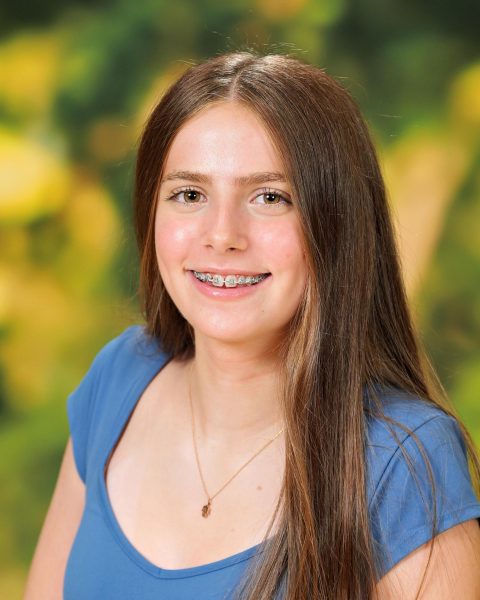
Seventh grade student Lily Demain represented South Africa alongside her partner, seventh grade student Maya Schwartz. They proposed using cleaner energy sources to reduce reliance on fossil fuels. They researched climate challenges throughout South Africa and then transformed that information into a speech, poster board and model of a wind turbine.
“I was very surprised to hear about the different effects of climate change on South Africa,” Demain said. “We started by just going on some different websites and researching, and then eventually we compiled our speeches to create what we gave today.”
Formerly known as the Climate Summit, the event was renamed and restructured in recent years, allowing students to present their projects as more of an interactive showcase, with students guiding visitors through their projects and explaining their models and posters, rather than having to speak off the cuff. The summit had previously followed a United Nations-style format in which students collaborated to represent countries and propose climate mitigation strategies that were later voted on by attendees.
This year’s Climate Fair added an innovation component, encouraging students to create models to illustrate potential solutions and adaptation strategies for their assigned countries. Middle school social studies teachers Matthew Jacobson and Heidi Zansler worked together to make the fair happen, guiding students as they researched, created presentations and prepared their projects.
“[The fair] gave kids more of an opportunity,” Jacobson said. “Each kid kind of had their moment in the sun.”
Students presented their countries from three different climate justice perspectives. The first position argued that past carbon emitters should pay for the damage they caused. The second position argued that all countries should pay, and the third position was that economic growth and development must come before climate issues.
After the presentations concluded, attendees met back in the Beit Midrash and voted on which position they felt made the most convincing arguments. The result was a tie between positions one and two.
Seventh grade parent Laura Hosid said she was proud of how her daughter and other students applied their research and presentation skills.
“Regardless of the topic, it’s very helpful for kids to be forced to speak in front of an audience, because that is a very useful skill,” Hosid said. “For them to be arguing a specific position, whether or not they agreed with it, is also an important thing for them to learn.”
Demain says the speech took the most time to prepare, but the project helped her develop research, public speaking and teamwork skills. She also said the process gave her a deeper understanding of climate change as a global issue.
Jacobson hopes students will take away an understanding of different perspectives on climate change and the skills to communicate their ideas effectively.
“There’s not one specific way to solve an issue,” Jacobson said. “It requires cooperation. It requires different perspectives. It requires listening to different viewpoints to better the world.”