
We’ve all heard it before: “JDS doesn’t recycle,” and “Recycling at JDS doesn’t do anything. It will just go to the trash.” I fully believed these statements until I discovered the truth about the JDS recycling program. The problem is not the school. It’s us: the students and faculty who generate plenty of waste and have a responsibility to properly dispose of it.
Director of Facilities Operations Bill Belke said that JDS recycles approximately 20,000 pounds of recyclable material annually. JDS also generates 170,000 pounds of trash. While Belke said this is normal based on school size, I believe that we can do better than recycling about 10% of our waste.
Montgomery County’s 42% recycling rate in 2022 was higher than the national average of 32%. However, the Department of Environmental Protection wrote that they have noticed an increase in non-recyclable materials in recycling bins and paper carts, which contaminates the bins, creating extra work for recycling centers.
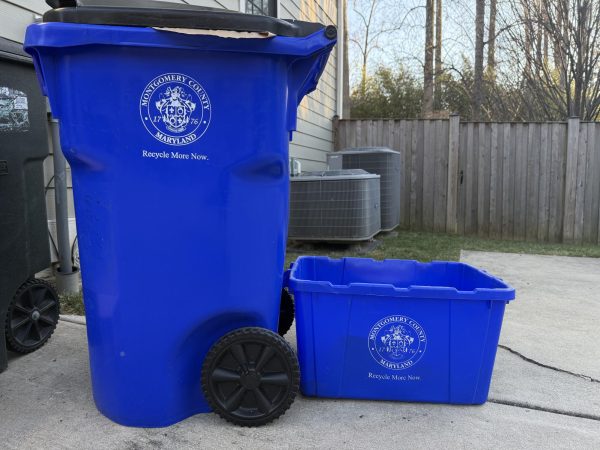
The main issue with the JDS recycling program is a lack of commitment to recycling and knowledge around the subject. Looking into recycling bins at school after lunch, I found an orange peel, half a protein bar, and many more non-recyclable items. Non-recyclable materials in recycling bins force everything in the contaminated bin to be thrown away as garbage.
While the school-issued eating utensils are recyclable, including lunch cartons, silverware and plastic bottles, they are not properly disposed of. Lunch cartons should be scraped off before being recycled. Instead, lunch cartons can be found with food inside, thrown into recycling bins, contaminating the bin.
Lack of recycling knowledge is a national issue. In a survey of 1,005 Americans done by the Paper and Packaging Board, 94% of people said that they recycle. However, one in five people also reported not knowing which materials are recyclable. This shows the lack of awareness around recycling, which prevents people nationwide from properly recycling.
Recycling benefits the environment and is a simple but worthy endeavor. First of all, recycling reduces greenhouse gas emissions. The Environmental Protection Agency stated that the recycling and composting of solid waste in 2018 prevented the emission of over 193 million metric tons of carbon dioxide.
The Scientists for Global Responsibility in the United Kingdom predict that around the year 2032, the global average temperature rise will climb permanently above 1.5 degrees Celsius, a point at which carbon emissions will be irreversible. Students from the University of Colorado, Boulder, estimated that improved recycling from 2020 to 2050 will reduce greenhouse gas emissions equivalent to taking one billion cars off the streets, helping with this issue.
Oak Grove Elementary School’s sustainability program in Sebastopol, California, achieved an 80% diversion rate for trash through maintaining a compost pile and redistributing food scraps, as well as recycling. The school’s community outreach program brings in recycling materials from nearby people.
If JDS students and faculty sorted their waste as well as these elementary schoolers, we would recycle nearly 136,000 more pounds of waste. Although Oak Grove’s program included sustainable alternatives besides recycling, JDS would still make a significant impact on the environment and our waste production by properly sorting waste.
Both garbage and recycling bins are clearly labeled with what materials to put in each bin. The side-by-side bins provide easy access to these instructions. Belke said the school has worked to up its sustainability, greatly reducing waste production. The entirety of the student and faculty body is the missing link in this program. Belke said that the main way to address the JDS recycling issue is “a lot of education.”
“We use a lot less paper than we used to,” Belke said. “All the employee contracts come out; they’re all electronic. Most of the documents are electronically signed now, so people use less paper than we used to, which is a good thing.”
The main arguments against recycling are time and cost. Recycling programs are difficult to maintain and require great effort. Recycling programs can also be expensive, making them seem like unworthy investments. However, the benefits of recycling, such as the environmental impact, outweigh the downsides.
This issue is not just in the hands of the night crew and maintenance department. JDS students and faculty must take the time out of their day to scrape off their food carton in the garbage can before recycling it. We must take the responsibility to properly sort our waste for the benefit of the world.