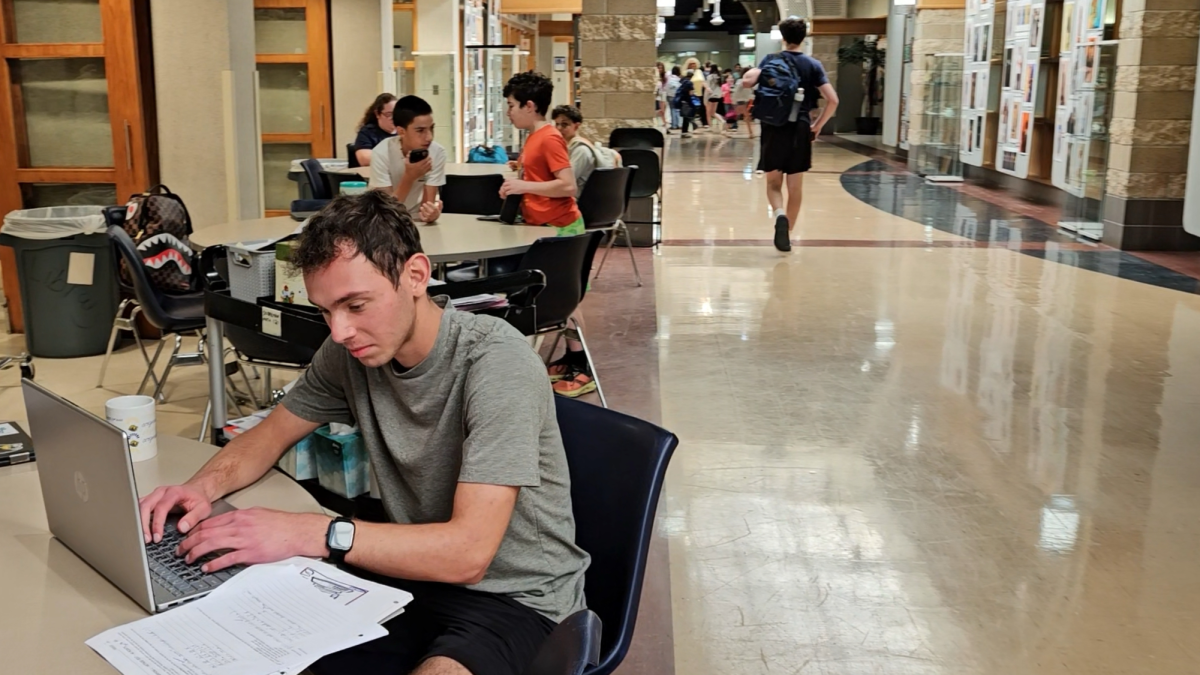


For senior Sammi Krantz, focus comes in a silver can. Each time she cracks open a Celsius energy drink, it is her personal version of a mindset refresh; it marks the start of her work routine, a small ritual that tells her brain it’s time to get things done.
Whether it’s a morning coffee, an energy drink before sports or a soda at lunch, caffeine has become an everyday part of life for many teenagers. More than 70% of teens in the United States consume caffeine each day, according to a 2025 article by Riley Children’s Health.
Krantz said she drinks approximately one Celsius and two cups of coffee a day. She started drinking caffeine regularly as a freshman, and since then, it’s just become another part of her day.
“Caffeine is a tool in terms of being able to focus in school and getting things done in a timely manner,” Krantz said. “At the same time, I think I, as well as my peers, see caffeine as a substitute for sleep, which is not great.”
Krantz said that her caffeine intake increases during stressful times, especially around exams or college applications. Over the summer, she tried cutting back to one cup a day, but once school resumed, the habit returned.
Krantz said that she does not really worry about the health effects that caffeine can have on her. But she said she knows that developmentally, caffeine isn’t great for teenagers.
An article by the National Library of Medicine talks about why caffeine might not be great for teens because energy drinks can disrupt sleep, raise heart rate and blood pressure, and are linked to mood swings and substance abuse in adolescents, whose brains and bodies are still developing.
Upper School Nurse Jillian Pedone explained that teenagers can be much more susceptible to the health effects of caffeine because their brains and nervous systems are still maturing. She added that excessive caffeine intake can cause stress and anxiety, which leads to sleep issues.
“Unpopular opinion, probably: I don’t think energy drinks should be allowed in school. They do a lot more harm than good,” Pedone said.
Pedone said professionals recommend that teens limit their caffeine intake to less than 100 milligrams per day. Many popular energy drinks, however, contain two to three times that amount, not including other high-sugar energy drinks that pose additional health concerns.
Whether it’s Celsius or Red Bull, energy drinks have surged in popularity in recent years. According to Quartz, sales grew by more than 5,000% between 1999 and 2010. More recently, a 2023 report from Second Wave Media found that 63% of teenagers regularly consume energy drinks.
For teens looking to reduce their caffeine intake, Pedone recommends a gradual approach to avoid withdrawal symptoms. If students usually drink two coffees a day, they should try cutting back to one before stopping completely, Pedone says.
While the school nurse focuses on caffeine’s impact within school walls, some parents are more concerned about how early caffeine habits begin and what that might mean for their children’s long-term health.
Rebecca Elias-Bachrach, a local pediatrician and mother of two high school teenagers, said she avoids giving her kids caffeinated drinks altogether. She believes that setting limits early helps prevent dependency.
“It’s already hard enough to organize sleep and attention at baseline for adolescents, and so if you add caffeine to that, I think it just makes things more difficult,” Elias-Bachrach said.
She added that she encourages her kids to stick with water or decaffeinated options and advises other parents to try to delay introducing caffeine to their kids for as long as possible.
As concerns about caffeine habits continue to grow, the conversation isn’t just whether teens should drink it; it is now about how they can make smarter choices. For parents, students and staff who are concerned about the effects of caffeine, their goal is for increased awareness leading to more thoughtful decisions.
“Just because something is available to us doesn’t mean it’s always the most healthy for us,” Pedone said.