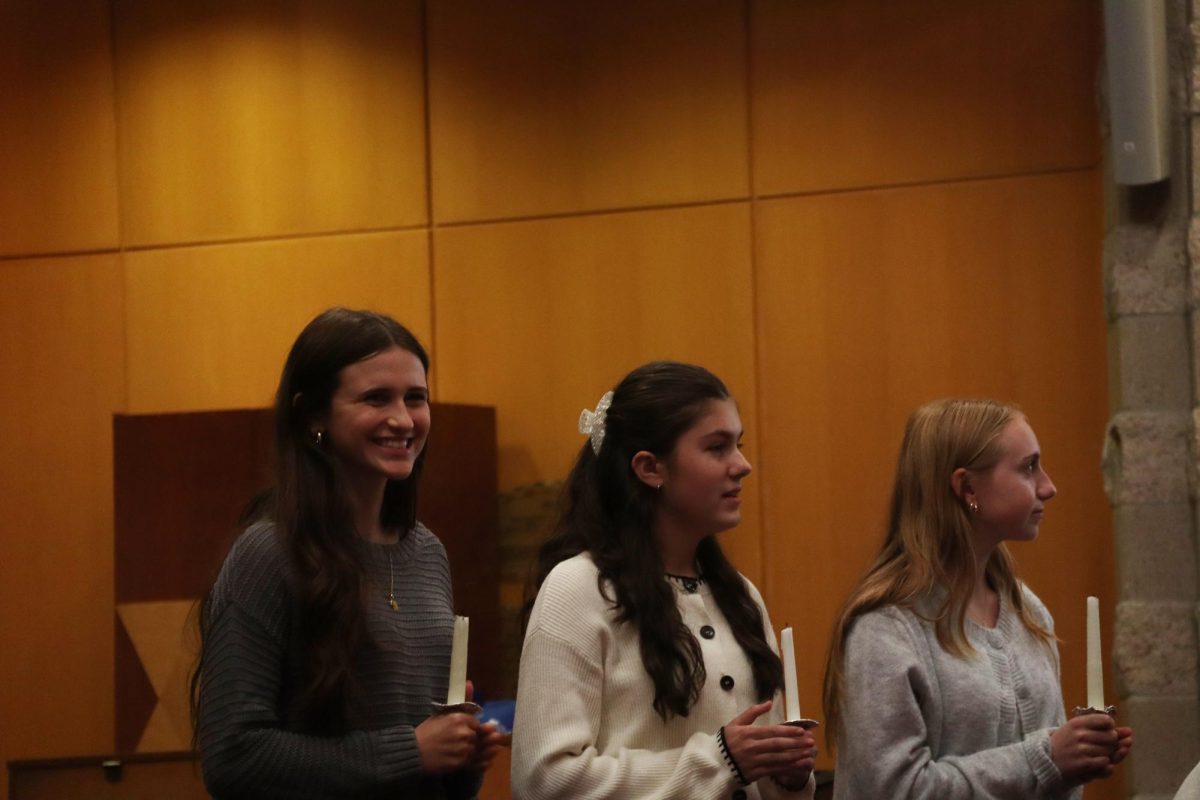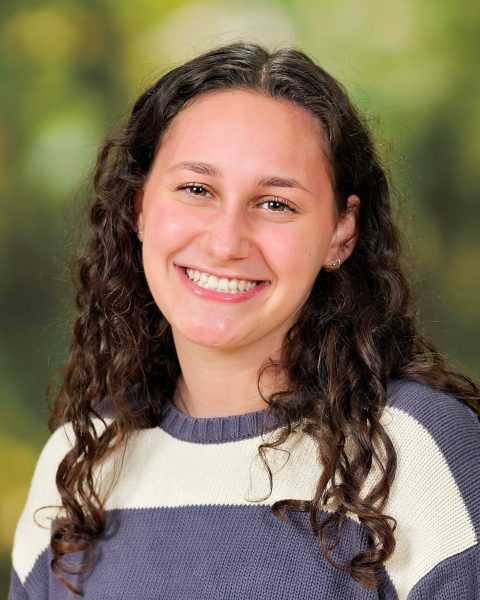

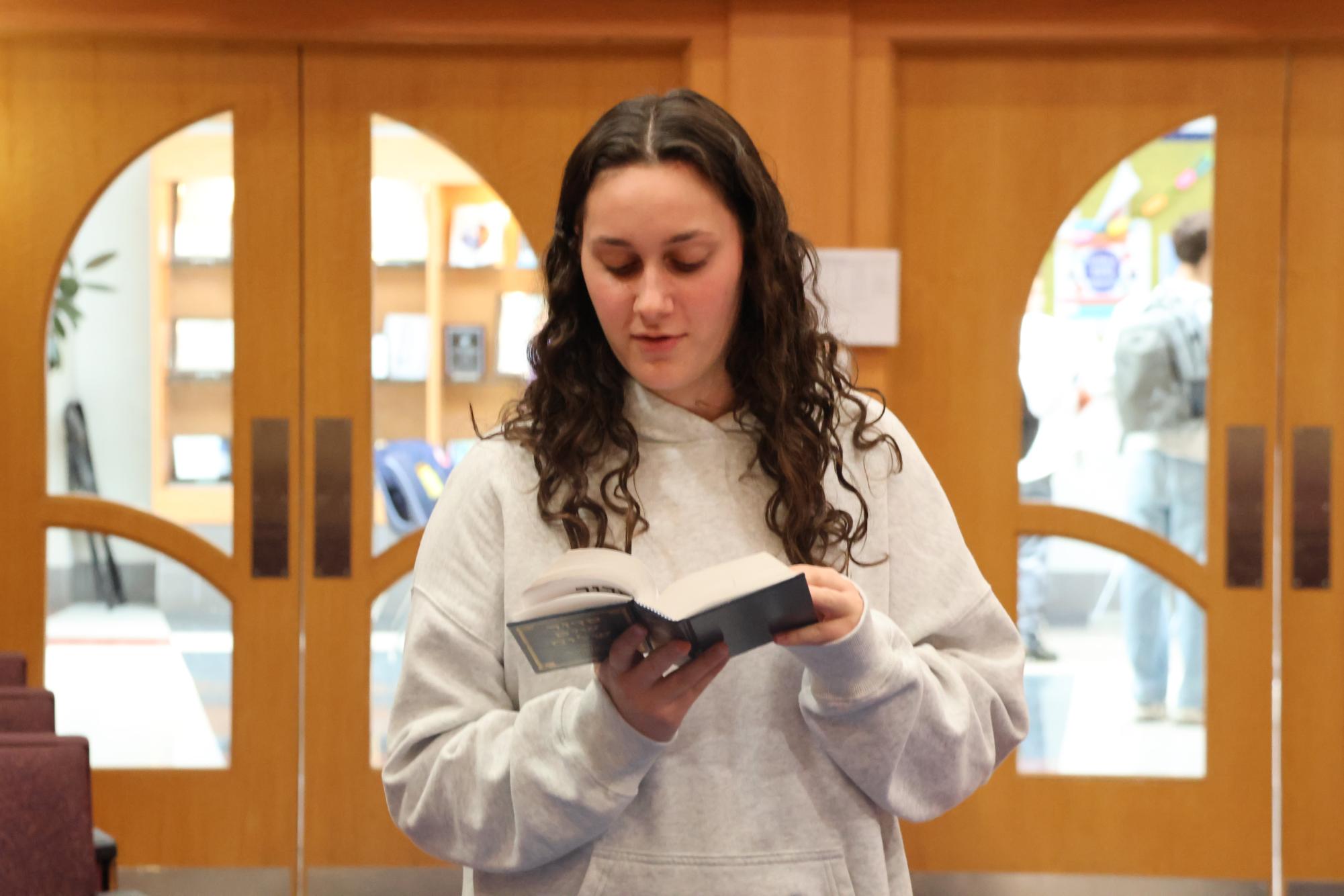
Every Rosh Chodesh, room 101 is filled with the voices of only women reading Torah, singing hallel and davening together. For Jewish women in certain spaces, there may not be an opportunity to have a leadership role. Women’s tefillah serves as a place for them to do so in an empowering way.
Women’s tefillah meets monthly in the middle school classrooms. According to Orthodox law, women cannot lead the davening service, Hallel or read Torah. This means that for some girls, a women-led tefillah is the only place they can lead and participate actively in the service.
In order to be inclusive and accommodate all realms of halacha, JDS women’s tefillah doesn’t constitute as a minyan, which means that they don’t say the kedusha, barchu, or kaddish prayers.
Although women’s prayer groups originated from Orthodox women’s need for prayer space, women from all denominations participate now. According to Rabba Aliza Libman Baronofsky, middle school math and Jewish texts teacher and Middle School B’Yachad Coordinator, women’s tefillah attracts girls from every ZK, including mechitzah, egalitarian, and non-davening ZKs.
“I think what’s really beautiful about women’s tefillah is [that] it’s been an opportunity for girls from different mediums to come together,” Libman Baronofsky said. “We know from a lot of research that women who are in groups of only women sort of experience whatever it is that they’re doing differently.”
Libman Baronofsky began helping organize women’s tefillah each month at JDS in 2016 when she joined the school’s staff, and has been the designated teacher in charge of it ever since.
Another teacher who participated in women’s tefillah is English teacher Dory Fox (‘09), but instead of as a faculty member, she participated when she was a student at JDS. Fox started davening in women’s tefillah when she was in high school, because she wanted to try out something new.
“I think that it’s really nice to bring people together who do different minyans usually,” Fox said. “I think it’s really easy to sort of get stuck in your silos of whichever you do, and it’s nice to break those boundaries a little bit when possible.”
Fox appreciated the opportunity to lead davening and read Torah, because she didn’t get as many of those opportunities at her Conservative shul.
The concept of women’s tefillah was introduced to the Jewish world in the 90s, according to Libman Baronofsky. Since then, women’s tefillah groups have become relatively common in modern Orthodox groups around the world. While there is no halachic reason that women can’t have their own prayer service, there is some cultural reasoning from Orthodox rabbis as to why it shouldn’t happen.
“When they put in that effort but go to a WPG (Women’s Prayer Group) instead of a synagogue, they are making a statement that they prefer the lesser fulfillment over the greater. They are figuratively being ma’avir al ha-mitzvos, stepping over a mitzvah. That, I believe, is sufficient reason to label a WPG a distortion of Torah principles. If most of the attendees of a WPG are actively choosing it over a minyan, the WPG is an instrument of misguided Torah principles, a teacher of distorted values,” said Rabbi Gil Student, explaining Rabbi Hershel Schachter’s position.
Junior Mali Osofsky has been a member of women’s tefillah at JDS since 6th grade, and she started to help Libman Baronofsky organize it last year. She thinks davening with the group is important for girls because it’s a unique opportunity that doesn’t always arise in Orthodox Judaism.
“Women’s leadership is an important value to me, and I think it [women’s tefillah] is a way that women can balance that and Judaism,” Osofsky said.
Women’s tefillah provides a rare and individual experience for girls in every sect of Judaism, whether it be an opportunity for them to read Torah for the first time, learn a new prayer, or just appreciate being in a room full of empowered women, according to Libman Baronofky.
“I really love the pluralism of this school, and it’s a very specific kind of religious experience,” Libman Baronofsky said. “It was always really nice to me that there were girls from lots of different minyans who came, and in terms of the quality of the experience, you can’t do this anywhere else.”