

Our world is tense right now, on the brink of an ideological eruption. Western civilization feels devoid of competent, thoughtful leaders. Peace in the Middle East feels shaky: Hamas faking the discovery of remaining fallen victims of Oct. 7 is so antithetical to our values of respect for the fallen. People are constantly falling down rabbit holes of extremism on shadier parts of the internet.
Conspiracy theorists are more popular than moderate and reasonable policymakers. For example, housing developments such as Return to the Land in the Ozark Mountains of Arkansas are being established as forbidden to Jews, Black people and LGBTQ people in America. The discrimination of minorities is a dangerous path and one that threatens the values our country has developed: tolerance and respect for all people.
On the other side of the aisle, according to the Middle East Forum, parts of European culture, once beacons of advancement and enlightenment, are being forced by social pressure to adopt parts of Sharia Law. This extremist way of life threatens the secularism and gender equality of the West, as non-Muslims students feel pressured to veil themselves in hijabs and citizens are stabbed for drinking alcohol on Eid al-Fitr.
This moment feels unprecedented, but it really is not. Twenty-three years ago on Feb. 1, 2002, the War on Terror raged, the world was adjusting to the new threat of foreign terrorism and extremism was on the rise. In the midst of the chaos, journalist Daniel Pearl found himself in Pakistan. A decorated reporter and masterful storyteller at the Wall Street Journal, Pearl illuminated unseen truths across the world. On his way to meet Islamic scholar Mubarak Ali Gilani in Karachi, Pakistan, Pearl was kidnapped by Al Qaida terrorists and taken into captivity.
According to the World Zionist Congress, nine days after being taken captive and after the world pleaded for Pearl’s release, the terrorists beheaded Pearl. His last words were “I am a Jew. My mother is a Jew.” While the world thought he was kidnapped for his commitment to the Western ideals of truth and integrity, the terrorists ensured that his death was associated with his Jewish identity. Their extremist ideology saw Daniel Pearl as dangerous, an enemy, when in reality, he was a truth-seeker and benevolent bridge-builder.
After two years of praying, advocating and pleading for Jewish captives taken hostage by Hamas on Oct. 7, 2023, to be freed, Pearl’s murder is a scary parallel to the hostage crisis that has befallen the Jewish community for the past two years.
It is easy to feel hopeless in the face of so much extremism. I frequently feel suffocated by the enveloping radicalism that threatens my existence. But I still have hope in our leaders to band together to counter this new wave of radicalism in our society. Optimistic? Yes. Foolish? Perhaps. Necessary? Absolutely.
The age of the internet purports the loudest, most extreme and most dramatic opinions that can easily send any moderate into despair. Left on the margins are the centrist leaders who preach normalcy. These moderate leaders remind me of people with similar spirit to Daniel Pearl and his values. As our school approaches Daniel Pearl World Music Day, I want to showcase a few figures who emulate Daniel Pearl’s ethos and give me hope for our world’s future.
- Journalist Wolf Blitzer: Since 2005, Blitzer has hosted one of the most widely watched nightly news shows, The Situation Room, on CNN. Every night for 20 years, Americans have turned on their televisions to listen to an in-depth, accurate and reliable analysis of the most current political issues. Blitzer has made an effort to host both Democratic and Republican guests and has moderated debates between members of both parties. As an international affairs expert, his spirit echoes Pearl’s fearlessness through his reporting from North Korea as the only network journalist in the country, Moscow during the collapse of the Soviet Union and the Middle East during the Iraq War.
- Sen. Susan Collins (R, ME): According to the Bipartisan Index, Collins ranked the most bipartisan U.S. senator for the ninth time in 11 years in 2024. Collins focuses on maintaining civility in Congress and focusing on what unites delegates instead of what divides them. Collins said that she believes Congress produces the best work when it engages in “honest debate, considers alternate viewpoints and incorporates ideas from both Republicans and Democrats.” Collins understands that the American government relies on parties coming together to enact effective change. She emphasizes bridging gaps to progress America and the world, a value Pearl held dear throughout his time as a reporter across the world.
- The Honorary Chairs of Disagree Better: Governors Spencer Cox (R, UT), Wes Moore (D, MD), Mark Gordon (R, WY) and Jared Polis (D, CO). Started by Cox as the Chair of the Governors Association, the organization’s goal is for leaders to change their rhetoric from accusatory to respectful. In connection with Daniel Pearl’s philosophy of using words to bridge cultural and political divides, many governors are spearheading change that will reshape American society by maintaining the fiery political spirit the nation was founded upon, while maintaining dignity for those who are in contradiction with one’s beliefs.
- Journalist David Brooks: Former Wall Street Journal writer and current New York Times Opinion columnist, Brooks is described as a moderate conservative but believes deeply in many liberal values. He is a staunch supporter of gay rights but emphasizes limited government involvement. His article “Party No. 3” emphasizes depolarization of the current American system. While the article was written in 2006, his views and messaging still apply, reading as a wakeup call for Democrats and Republicans alike. Brooks, like Pearl, sees the world in need of fixing, but does not just stand idly by. Brooks’ commitment to repairing our world is steadfast and constructive, his writing builds a foundation for a more balanced and civil world.
- Ground News: While not an American figure, this app is tailored to rid consumers of biases in their news. Typical algorithms push a certain viewpoint that they know the reader likes, but this app does the opposite. The app checks blind spots in reporting and gives the consumer news sources from all sides of the aisle, indicating the tilt of the news site on each article. Pearl was a strong advocate for seeking the truth, especially when it was shrouded. In today’s digital age, truth is often obscured. Ground News seeks to uncover some of those truths by unpacking the partisan rhetoric of the media to parse together the most unbiased, truest stories happening in the world today.
- Singer Paul David Hewson (Bono): As lead singer of U2, Hewson is not just a musician but a philanthropist. He started the organization ONE, advocating for improved global health and development. Specifically, Hewson has worked to combat the HIV/AIDS crisis in Africa and has generated over $750 million for his global fund to treat and care for HIV/AIDS patients in Africa. As Pearl was a musician and advocate for global development through his writing, so too is Hewson’s work through U2 and ONE. Especially on Daniel Pearl World Music Day, Hewson’s work mirrors what Pearl’s family wished for Pearl to be remembered as: a change-maker and musician.
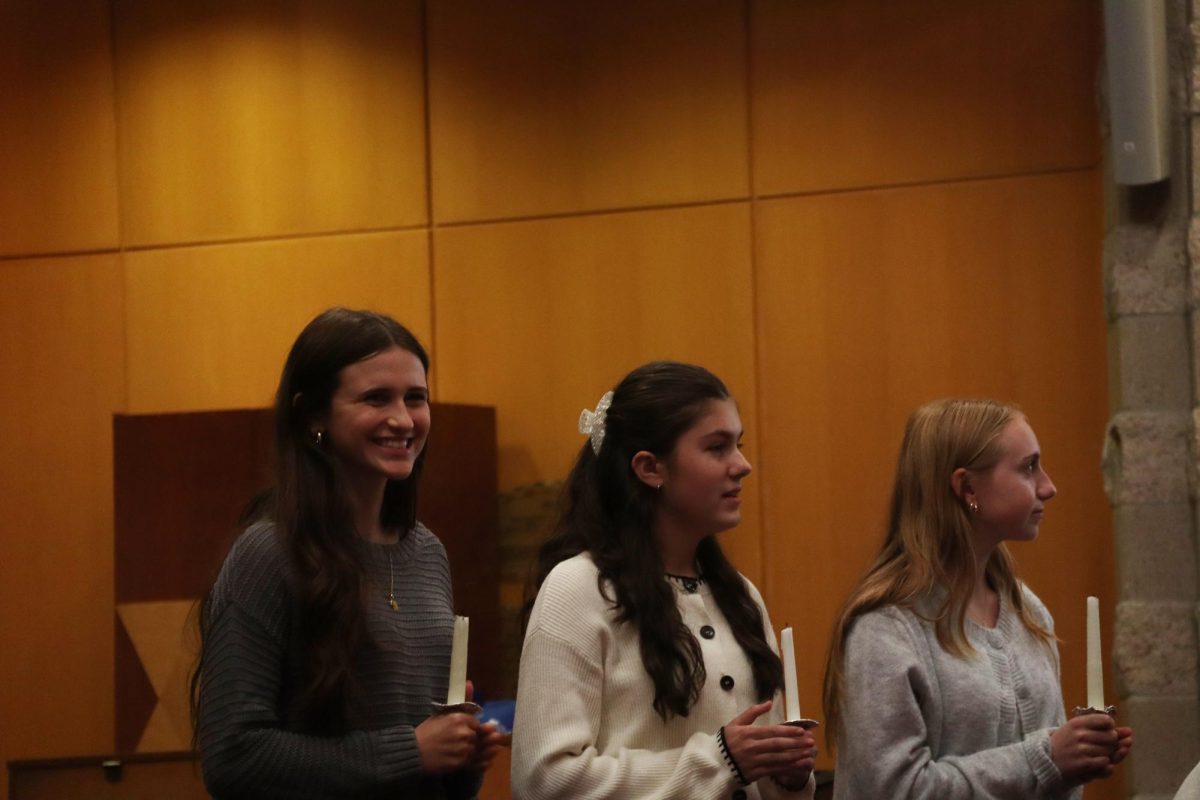
As our community moves into Daniel Pearl World Music Day, following these trailblazing figures means embodying Pearl’s memory that his family hoped to preserve. As we listen to music, remember his legacy and feel joy together, I hope to add another dimension to the day: challenge the radicalism of the day through bridging political divides. As the state of the world sadly mirrors the extremist culture that Pearl fell victim to 23 years ago, I urge others to commemorate Daniel Pearl World Music Day as not just a day of music and journalism but also of bridge-building and leadership that embodies civility.