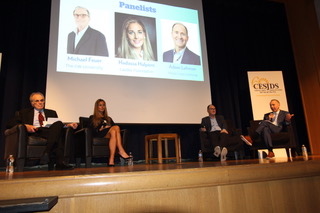

Amidst war in the Middle East, antisemitism on college campuses and deepening divides within the American Jewish community, the Zionist Rabbinic Coalition (ZRC) convened its fifth annual conference in Washington, D.C. on April 28. The three-day conference gave approximately 100 rabbis and lay leaders the opportunity to hear from policymakers and experts on issues concerning Jews and Israel.
Rabbi Stuart Weinblatt, rabbi emeritus of Congregation B’nei Tzedek in Potomac, founded the ZRC in 2020 at the suggestion of former Israeli Ambassador Ron Dermer. According to Weinblatt, the ZRC is a nonpartisan, pluralistic organization for Zionist Jewish leaders to address issues affecting Jews around the world.
“We are the collective voice of Zionist rabbis,” Weinblatt said. “And in that context, just as rabbis are advocates from this role for living a Jewish life, so too, we need to be advocates for the Jewish people and for the homeland of the Jewish people, which is the land of Israel.”
Over the past five years, the ZRC has grown from a group of 60 rabbis and lay leaders to a national network of over 2,000 members. It hosts events including an annual High Holidays seminar in New York, interfaith lobbying and international trips.
Since its inception, the ZRC has hosted an annual conference to give its members the opportunity to learn more about pressing Jewish issues. This year’s conference was the largest in the ZRC’s history. The conference theme, “The Eighth Front: What Rabbis Need to Know; What Rabbis Need to Do,” references the seven-front war that Israel has been fighting for the past several years and its effect on Jews globally.
“The eighth front is the public arena,” Weinblatt said. “The eighth front is antisemitism on college campuses, in the public sphere, in the media. The eighth front refers to the attack and assault on Israel and the Jewish people outside of the battlefield.”
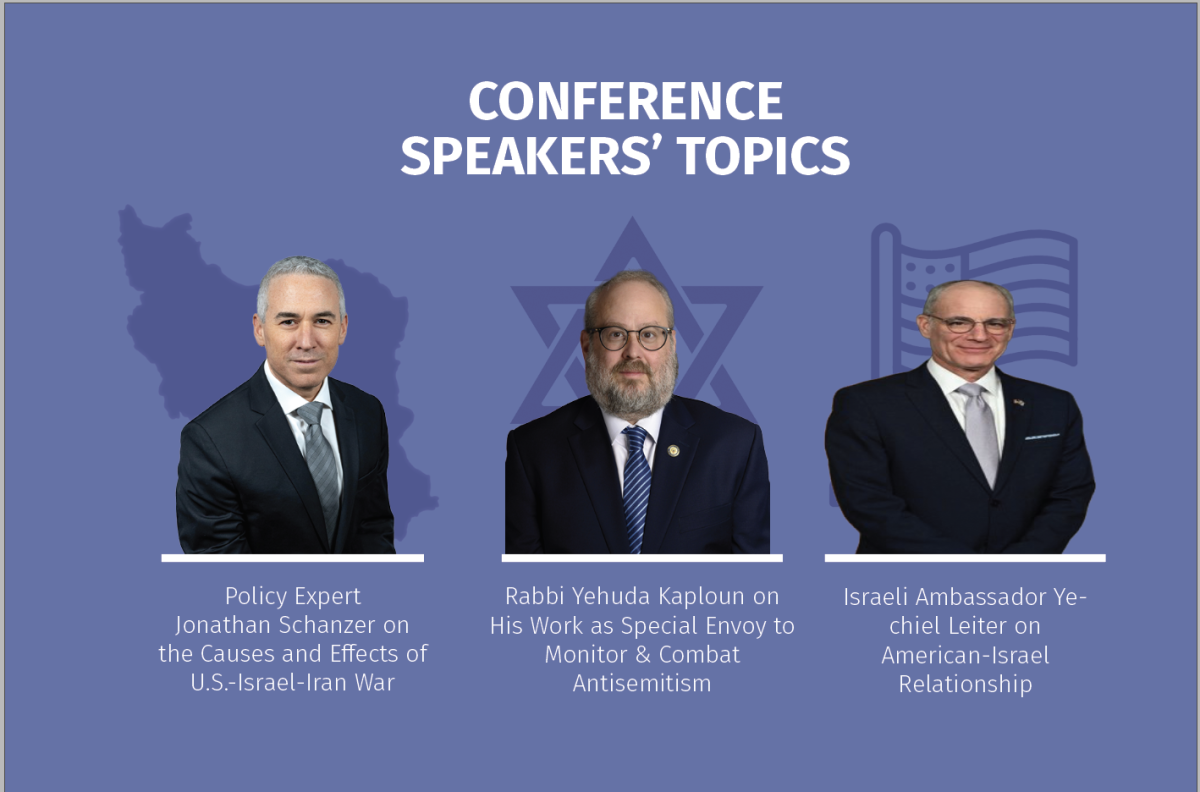
The conference’s first speaker was JDS parent Jonathan Schanzer, executive director of the foreign policy think tank Foundation for Defense of Democracies. Schanzer, a national security expert, spoke about the causes and effects of U.S.-Israel-Iran War, particularly the “economic war” over the Strait of Hormuz.
This was Schanzer’s third time speaking to the ZRC. In addition to being a personal friend of Weinblatt, he says that he keeps returning because he believes it is important for the community to understand developments in the Middle East and how they affect them.
“If you identify as a Zionist rabbi, this is a crucial time to get facts and to be able to bring those facts back to your community and explain what is going on with clarity,” Schanzer said. “… My job is to share the facts and my analysis. Their job is to do with it as they see fit.”
The conference also included Jewish learning sessions, a gala dinner honoring former House Majority Leader Rep. Steny Hoyer for his support for Israel and a lunch address from Israeli Ambassador Yechiel Leiter at the Israeli Embassy. On April 29, attendees went to the State Department to meet with leaders and policymakers, including Ambassador Rabbi Yehuda Kaploun, the U.S. Special Envoy for Monitoring and Combating Antisemitism.
Programming on the final day focused on combating antisemitism and addressing polarization within the American Jewish community. In the morning, Roberta Kwall, an law professor at DePaul University in Chicago, spoke about her upcoming book “Polarized: Why American Jews Are Divided and What We Can Do About It.” Kwall emphasized the importance of allowing religious and political disagreements while maintaining standards that promote meaningful discourse.
“I think it’s just really imperative that we, as a Jewish community, do have a big tent,” Kwall said. “But my message is very clear: a tent without walls collapses. So while I want a big tent and I want a big center, I don’t think that the tent or center can be open-ended.”
Weinblatt said that planning and organizing a large conference like this is a difficult process spanning months of preparation. Yet he said that all of that work pays off when rabbis return to their communities equipped with the new knowledge they learned.
“A successful conference will be one in which rabbis feel that they come away from it better informed,” Weinblatt said. “…Sometimes rabbis can be in isolated communities, and they sometimes need the reinforcement of an organization like this, which seeks to support rabbis in their work.”