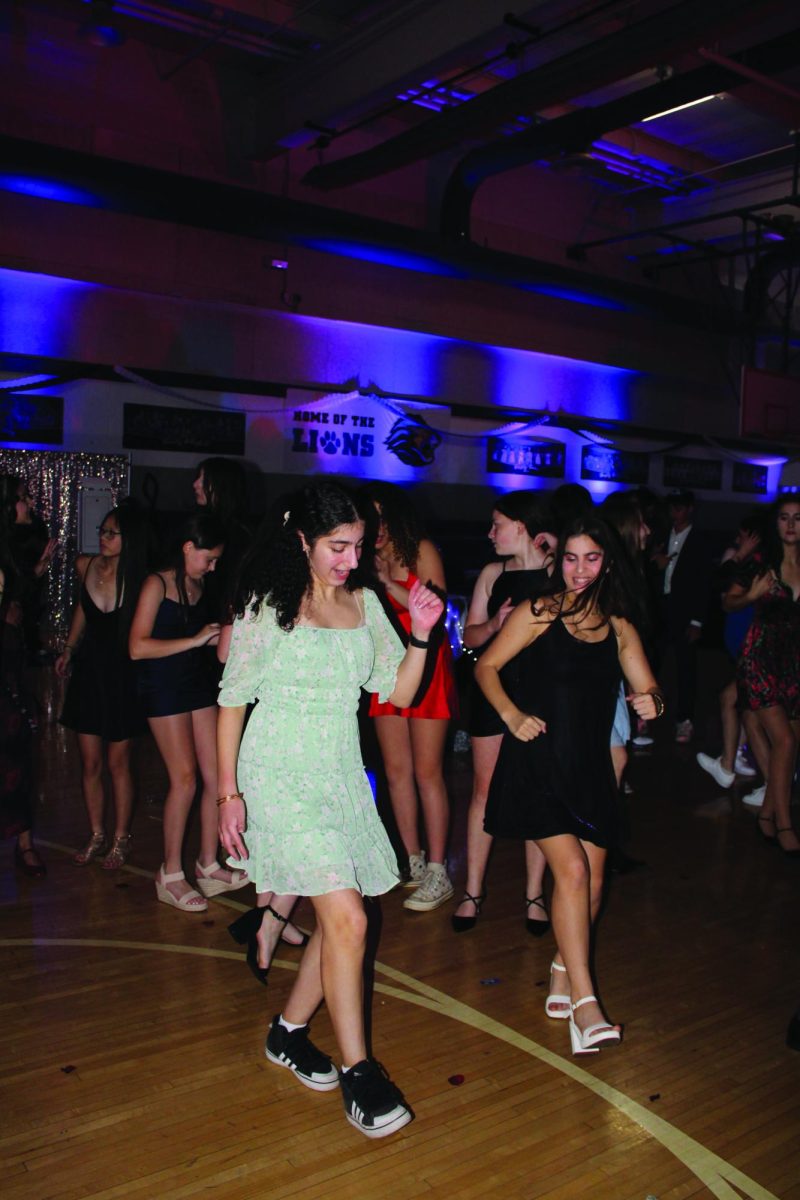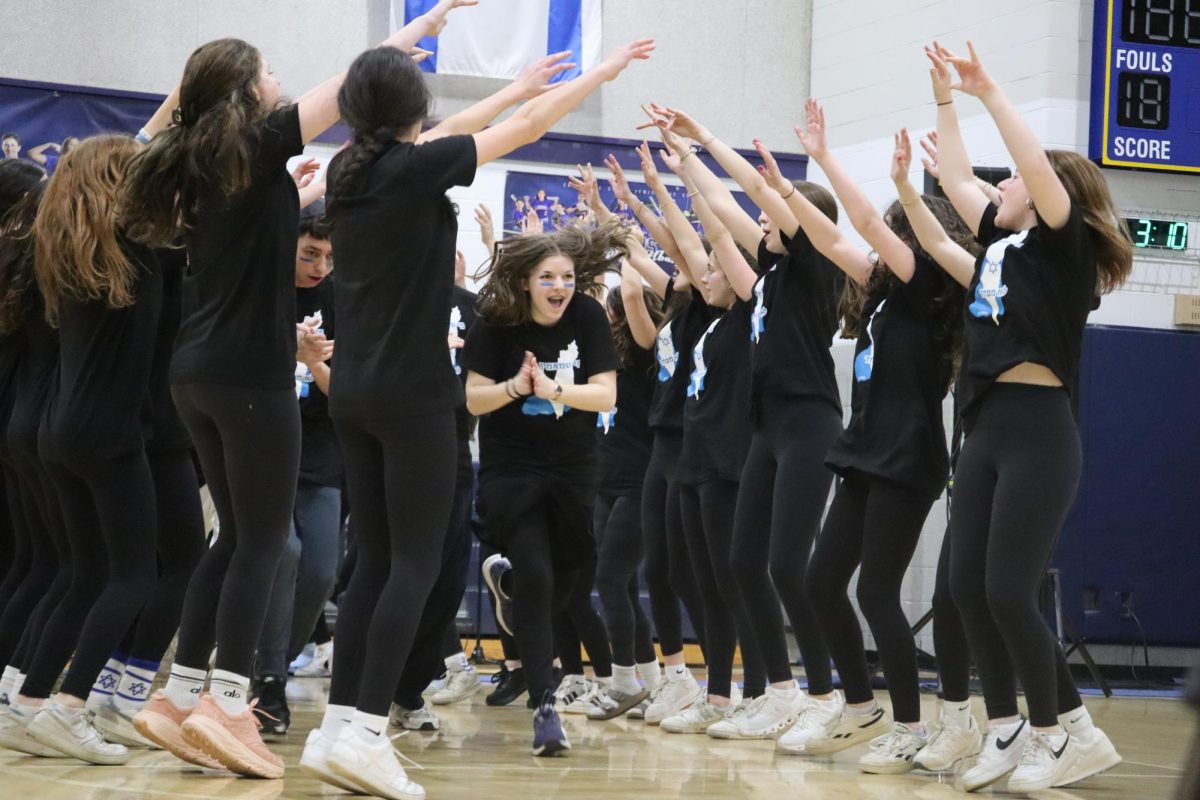


This fall, JDS high school students joined American teenagers for the first time in a classic American fall ritual: the Homecoming dance. On Saturday, Oct. 18, students across the high school gathered in the Upper School during JDS’ first official Homecoming dance.
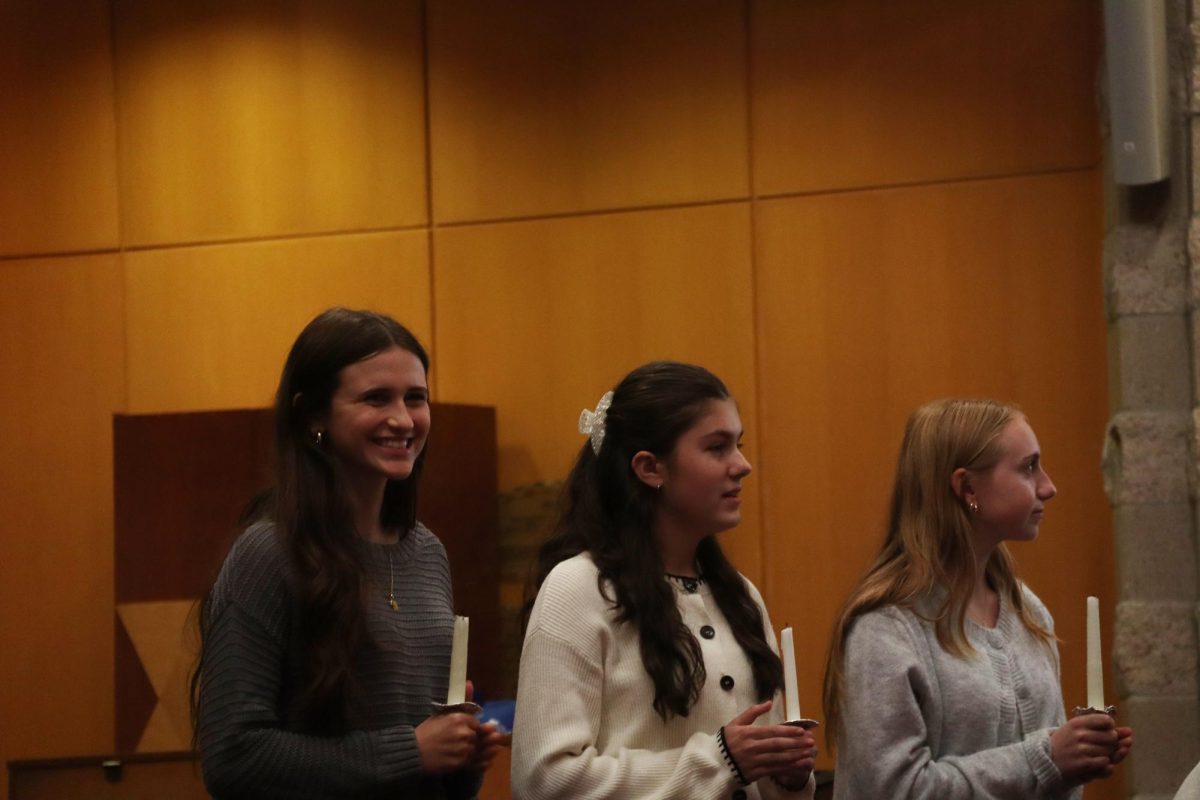
Homecoming commenced at 8:30 p.m. with a Havdalah service, a ceremony marking the end of Shabbat and the beginning of the new week. Students from each grade led the service together as the rest of the attendees wrapped their arms around each other in a circle in the gym.
Black and White was selected to be the theme of the event, as it was requested most popularly in a form sent out to the high school student body. The gym was decorated with black and white centerpieces on tables, black and white balloons and a light-up sign across the bleachers that read “CESJDS HOCO.”
“The school was really well decorated,” freshman Evy Grunberger said. “The gym looked so nice with all the decorations, and it truly felt like a school dance.”
Beyond the decorations, there was a photo booth in the gym and a DJ playing both English and Hebrew hits. Students were on the dance floor throughout the entire night, dancing in mosh pits and singing along to songs. In the cafeteria, there was a snack buffet, including popcorn and cookies, and an assortment of drinks.
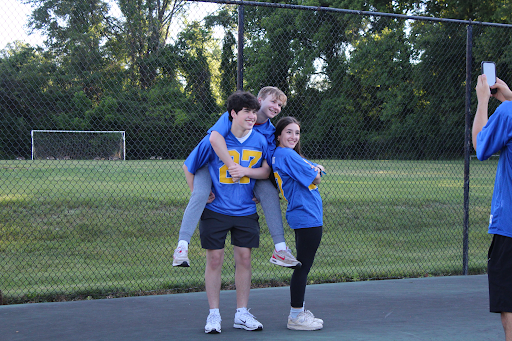
Homecoming celebrations were not limited to the night, though. While at most schools there is a Homecoming football game on the Friday night before Homecoming, JDS does not have a tackle football team; thus, school spirit was presented through the several other fall sports. The next day, on Sunday, Oct. 19, high school varsity girls tennis, JV and varsity girls volleyball and varsity boys soccer played Berman Hebrew Academy teams at home. The varsity girls soccer team played at Berman.
According to High School Principal Dr. Lisa Vardi, there have been requests by students for a Homecoming dance for many years. However, the discussion amongst faculty began around Feb. 2025.
Eleventh Grade Dean Reuben Silberman had significant involvement in helping plan the event. According to Silberman, part of the parents’ contribution was decorating the space in the black and white theme.
“There had been some parental interest, and at the beginning of the year we sent out a survey to see what kind of student interest there was, and it seems like there was a lot,” Silberman said. “But since the year had already started, we ended up with very little time to plan.”
The intention behind the dance was to promote community and give students more opportunities to engage in social events within the school, according to Vardi. To coordinate the dance, grade deans worked together along with a committee of parent volunteers.
While the school funded the food and DJ, parents were asked to contribute to funding decorations, and an email was sent out to high school parents asking those who could to contribute.
Students were permitted to arrive between 8:30 p.m. and 8:45 p.m., and were only allowed to leave after 10 p.m. According to Silberman, this rule was enacted in order to ensure that students stay at Homecoming, rather than only coming for a few minutes. Additionally, students were only allowed to bring clear backpacks and small purses to prevent illegal substances from entering the school. The school also had a breathalyzer to check if a student had consumed alcohol, if deemed necessary.
“One concern we had was that kids would come and immediately decide that they weren’t interested and leave,” Silberman said. “That would make it a less fun event and make it less communal. So that sort of led to the rule about when students come and leave.”
Another guideline the school set was the dress code. While there was no official dress code policy, the school told students to wear clothes that they felt were appropriate for a school-sponsored event, which didn’t necessarily have to fall in line with the everyday dress code.
“We had a lot of conversations about the dress for the dance, and we ultimately settled on something that was up to student interpretation, and gave them some agency,” Silberman said. “We want students to develop a sense of responsibility around what is appropriate to wear and when.”
In the past, there have been other school-wide dances besides prom. The last eve
nt of this sort was was MORP, or prom spelled backwards. This event was documented to have occurred between 2010 and 2019, either held at Ohr Kodesh Congregation or at the Upper School, depending on the year. MORP, unlike Prom, allowed all students to attend rather than only guaranteeing tickets to seniors.
According to Dean of Students Roz Landy, the homecoming dance this year was far more popular than the MORPs that JDS used to run, with a significant showout among freshmen, sophomores and juniors. Landy was pleased with the attendance and anticipates that a similar dance will happen again in the future.
“It’s another fun activity for kids to get together, to enjoy each other’s company,” Landy said. “Kids at JDS live in many different areas, it’s hard sometimes to get together on the weekends. So this gives them something to look forward to and to enjoy.”
In plans to host a Homecoming dance in the future, there are hopes to have student leadership take part in planning. According to Silberman, if the school wants to expand the budget, they might sell tickets to students rather than allow all students to attend for free. Grunberger is excited to have had the opportunity to attend another Homecoming
“I think JDS did a great job,” Grunberger said. “It was really exciting to go into high school and be able to have a Homecoming.”